Singapore Has Successfully Proven the Container-to-F&B Concept
Converting shipping containers into dining spaces is not a new concept in Singapore. Since the arrival of container-themed restaurants at Tebing Lane in Punggol in 2017, this model has been operating in the local market for nearly a decade.
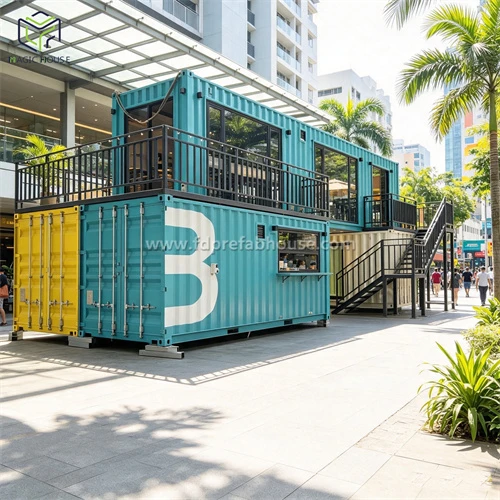
Located right next to the Punggol Waterway, Tebing Lane-once a quiet path in a former fishing village-has transformed into a popular gathering spot for young people and families following the arrival of container-themed restaurants and cafes. Among them, the restaurant "Bu E Bu Zuo" (meaning "Don't Sit Unless Hungry") specializes in a fusion of local flavors and creative cuisine; as night falls, the area comes alive with outdoor lighting and a vibrant, relaxed atmosphere, with many open-air eateries welcoming diners to bring their pets along.
On a larger scale, Cosford Container Park opened in January 2024 near the end of the runway at Changi Airport Terminal 3. It utilizes 13 converted shipping containers to create a dining hub where patrons can watch planes take off and land at close range. Starting in May 2025, the park introduced weekend mermaid performances, further enriching the programming within the container-based space.
Why Containers? Time, Cost, and Flexibility
Container architecture has gained a firm foothold in Singapore's F&B landscape for several practical reasons. First is the construction timeline. While traditional dining spaces typically require months from site selection to opening, container structures are prefabricated in factories, allowing the main structure to be assembled on-site within just a few days. Second is flexibility. Singapore frequently adjusts land-use planning; container structures can be hoisted and relocated in their entirety, avoiding the demolition costs associated with traditional buildings.
Third is the clear regulatory pathway. Singapore's Building and Construction Authority (BCA) provides an approval process for temporary structures-specifically container structures of up to two stories-with a permitted usage period of no more than 36 months; applications must be submitted by a Professional Engineer (PE). The BCA requires applications to be submitted at least three weeks prior to the start of construction. The approval process involves two stages: first, obtaining preliminary approval, and second, submitting a Professional Engineer's (PE) supervision certificate upon completion of construction to secure the Permit to Use.
From "F&B Hubs" to "Context-Specific Amenities"
In recent years, container-based F&B spaces have primarily appeared in leisure-oriented settings-such as riverside locations, areas near airports, and the vicinity of commercial districts. However, with the rapid expansion of EV charging infrastructure in Singapore, a new application scenario is emerging: amenity spaces for drivers at charging stations.
This setting imposes requirements on container architecture that differ from those of standalone F&B spaces. Charging station sites are typically more constrained than commercial districts, requiring container layouts to adapt to irregular parking areas. The primary users-taxi and ride-hailing drivers-prioritize space efficiency over ambiance. Furthermore, the space serves functions beyond just dining; drivers may need to manage ride requests, take short breaks, or handle brief business communications while their vehicles charge.
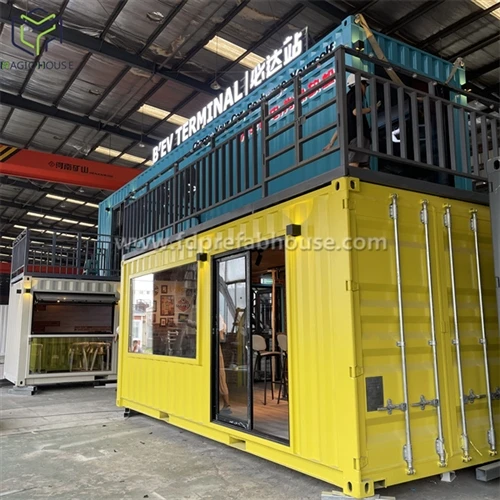
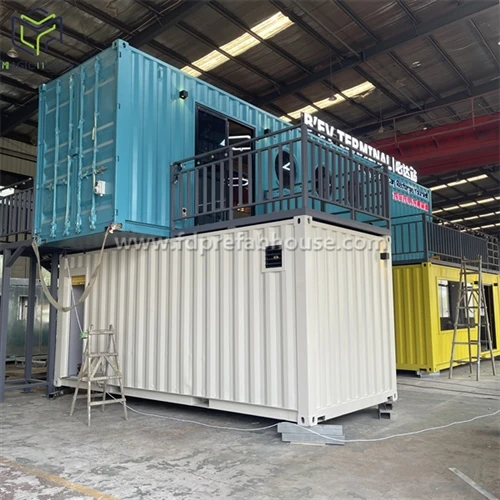
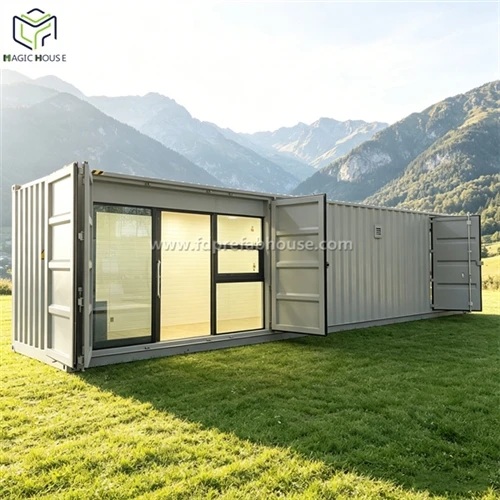
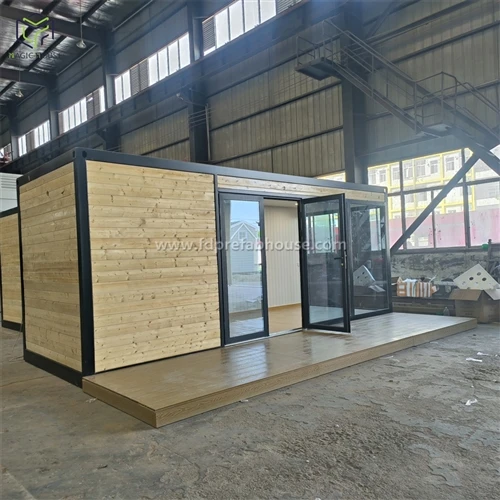
Local Singaporean companies are already exploring solutions that adapt container architecture for charging station environments. Multi-purpose, eco-friendly power containers can serve as mobile cafés, support facilities for charging stations, or temporary workspaces. Product designs for container cafés tailored to charging stations have already hit the market; these often feature a two-story structure composed of three containers, with a quiet rest area on the upper level and an F&B service area on the lower level.
Experience gained from projects in Punggol and Changi has demonstrated that container structures can withstand Singapore's tropical climate, proving their effectiveness in terms of thermal insulation, moisture resistance, and durability. Applying these lessons to the charging station context is primarily a matter of functional adaptation rather than technical feasibility.