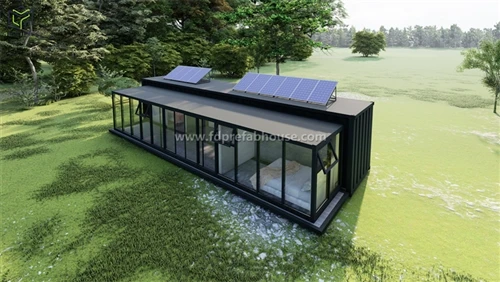
The United States lacks a unified federal-level code for container-based housing; instead, market access is governed by state and local Authorities Having Jurisdiction (AHJs) based on the specific building codes they have adopted. Recently, many U.S. buyers purchasing expandable container homes equipped with integrated solar-plus-storage systems have faced project delays. Because the equipment lacked system-level certification, these buyers were frequently asked to submit additional documentation or were even required to undergo on-site "Field Evaluations" during the construction permitting process.
Under current standards-including Section 706.2 of the 2026 National Electrical Code (NEC)-energy storage systems must be "listed" as complete, integrated systems (e.g., via the UL 9540 system-level certification pathway). Furthermore, they must be accompanied by a UL 9540A thermal runaway test report to satisfy fire safety approval requirements. Inverters must comply with UL 1741, and photovoltaic (PV) modules must hold UL 1703 or equivalent certification.
To navigate these barriers, experienced export-oriented manufacturers are now addressing compliance requirements early in the process. At the Bill of Materials (BOM) stage, they select core components that meet the necessary certification standards and provide technical data sheets (cut sheets) and certification documents for key equipment upon delivery. Additionally, for expandable container units-such as those with fold-out sections-the main structural frame must also comply with the International Residential Code (IRC) or International Building Code (IBC) standards adopted by the local jurisdiction.
Industry Insight: For companies targeting the U.S. market, simply piecing together equipment from various brands is no longer sufficient. Suppliers capable of taking responsibility for the entire integrated system-encompassing structure, energy components, interior fit-out, and regulatory compliance-while providing a comprehensive documentation package, will hold a competitive advantage in the North American market.