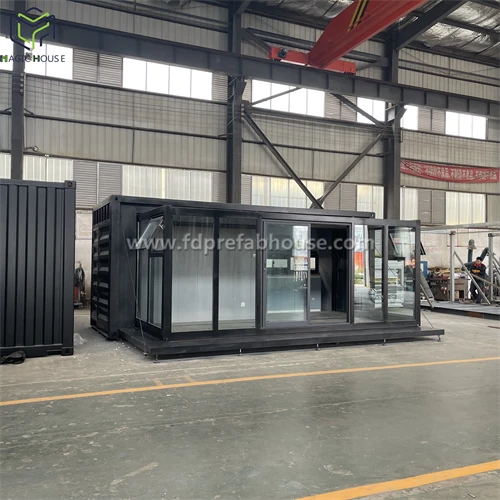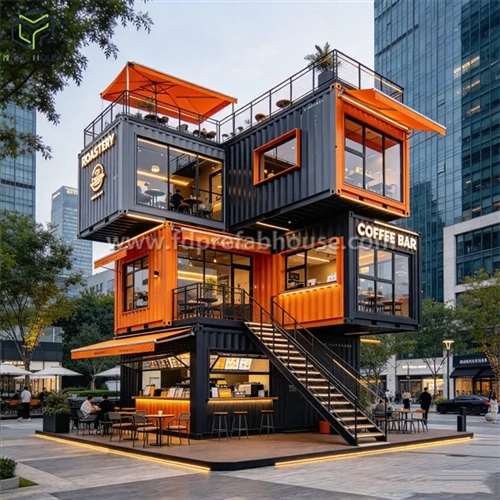
North America is the world's largest market for container housing; the U.S. market alone is projected to reach $42.67 billion by 2032, accounting for 37.1% of the global market. Container architecture in North America primarily adheres to the International Building Code (IBC) framework.
Specific IBC Provisions for Container Architecture: The 2021 edition of the IBC introduced a new section-Section 3115, "Intermodal Shipping Containers"-which outlines the regulatory requirements for converting shipping containers into buildings or structures. Like traditional homes, container structures require building, electrical, plumbing, and mechanical permits.
Five Core Requirements for Fire Safety Inspections in North America:
Fire-Resistant Materials and Ratings: Class A fire-resistant materials must be used, and walls and roofs must achieve a fire-resistance rating of at least one hour. During conversion, the original steel structure's fire-resistant coating must be preserved, or intumescent fire-resistant coating must be applied. British Columbia (Canada) requires the submission of fire-resistance test reports from third-party laboratories.
Egress Routes and Exits: Each unit must have at least two exits leading in opposite directions, and corridors must be at least 1.1 meters wide. The U.S. NFPA 101 standard mandates that multi-story container buildings be equipped with smokeproof stairwells.
Electrical System Fire Safety: All wiring must be protected by metal conduit, and distribution panels must be UL-certified. California requires the installation of Arc-Fault Circuit Interrupters (AFCIs).
Automatic Fire Suppression Systems: Container buildings exceeding three stories are required to install sprinkler systems, with sprinkler head spacing not exceeding 3 meters.
Smoke Control and Alarm Interlocks: The National Building Code of Canada (NBC) requires container buildings intended for public use to be equipped with independent smoke detectors and an integrated alarm control panel; the U.S. IBC requires a smoke zone for every 200 square meters and the installation of a mechanical smoke exhaust system.