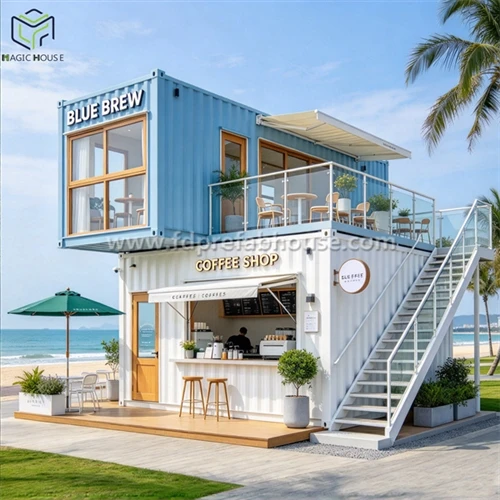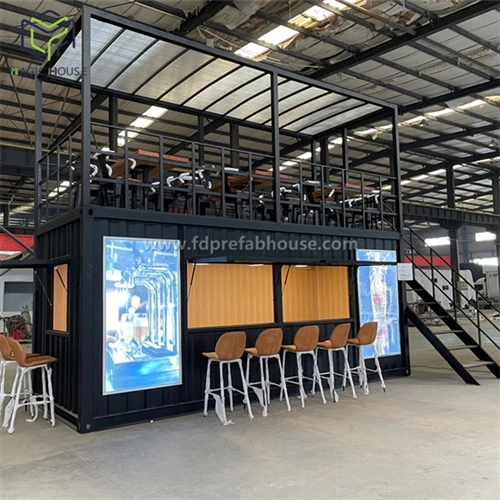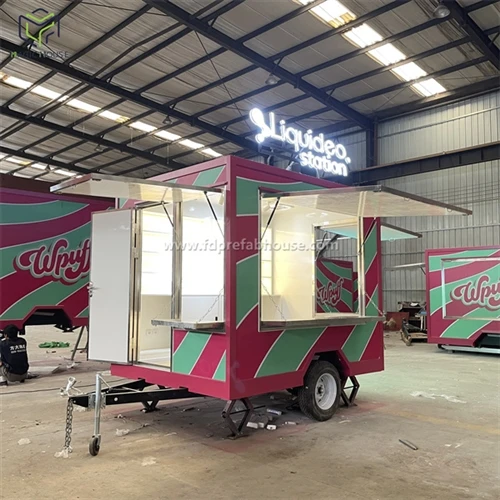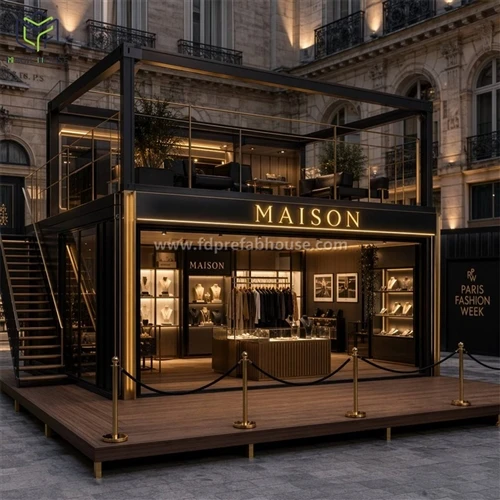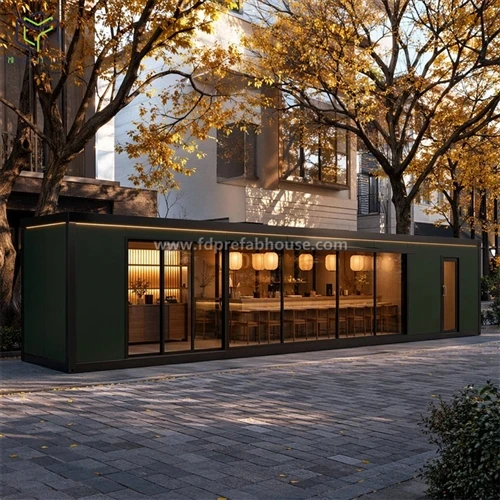
I. Beyond Foot Traffic: A Three-Dimensional Assessment Model
Many overseas investors choose container cafes under the mistaken belief that high foot traffic alone guarantees profitability. In reality, site selection requires a three-dimensional evaluation: **foot traffic characteristics, land-use zoning, and supporting infrastructure.** While the advantage of a container cafe lies in its lightweight, flexible deployment, a critical risk is that if the local zoning does not permit food and beverage (F&B) operations, the unit cannot open-even after being shipped and hoisted into place-resulting in a total loss of shipping and installation costs.
1. Foot Traffic Characteristics: Distinguishing Between Stable and Seasonal Patterns
Prioritize locations with stable, recurring foot traffic-such as university campuses, business parks, transport hubs, or community commercial plazas. Secondary options include areas with seasonal traffic, such as beaches, tourist attractions, or festival grounds.
- Commuter Traffic: Concentrated during morning rush hours; ideal for small, 20-foot "window-service" container cafes, which typically offer a shorter payback period.
- Tourist Traffic: Higher average transaction value, but prone to sharp declines during off-peak seasons; best suited for mobile, temporary setups rather than permanent, foundation-based installations.
- Pitfall: High vehicle traffic does not equate to effective foot traffic. A site must provide safe pedestrian access and parking; otherwise, conversion rates will be extremely low.
2. Land-Use Zoning: Key Differences Across Australia, the U.S., and the U.K.
Australia: Governed by the National Construction Code (NCC), where land-use zoning dictates whether food retail is permitted. Approval processes for temporary placement differ significantly from those for permanent structures. Permanent commercial use requires a "Building Approval," while short-term "pop-ups" require a temporary land-use permit. Furthermore, public spaces generally mandate a $10 million (AUD) public liability insurance policy and a minimum clear width of 1.5 meters for pedestrian pathways.
United States: Regulated by state and municipal zoning codes. "C1" (retail) zones typically permit coffee and F&B operations, though some areas may require a "Conditional Use" permit. **Permanent concrete foundations are classified as fixed structures, triggering full compliance requirements for building codes, ADA (Americans with Disabilities Act) accessibility, and fire sprinkler systems. Conversely, using pier blocks or non-permanent foundations may allow the unit to be categorized as a "mobile food service unit," which simplifies the approval process.**
In the United Kingdom (England), such units are governed by the *Town and Country Planning Act*. Even if a shipping container is technically movable, its use as a standalone café (Class A3/E food and beverage use) generally requires planning permission; exemptions apply only to ancillary facilities or short-term, temporary events. Key areas of planning review include site setbacks, noise levels, and outdoor seating arrangements.
II. Site and Infrastructure Checklist (To be verified prior to export)
Site requirements must be confirmed in advance, including: electrical load capacity (espresso machines have high instantaneous power demands), water supply and drainage/grease traps, sewage discharge permits, waste storage space, and access routes for crane-assisted delivery. Many clients overlook electrical capacity, only to find they cannot install their equipment once the container arrives on-site.
III. The Correlation Between Site Selection and ROI
For a shipping café of identical specifications, the quality of the site can cause the payback period to vary from 7 months to over 24 months. A prime location can generate over 250 takeaway sales per day with a gross margin of 70%–80%, whereas a poor location may yield fewer than 80 sales per day, placing persistent strain on cash flow.
Conclusion
The cost-advantage of a shipping container café is predicated on **site compliance**. During the production phase, Fangda Mofang (Fangda Modular) can pre-configure the unit-incorporating provisions for plumbing, ventilation, exhaust systems, and accessibility features-to align with the target country's specific standards, thereby minimizing the need for on-site modifications or rework.