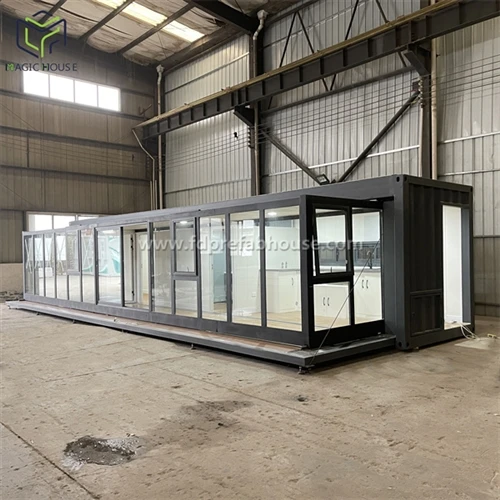
The EU market enforces a rigorous technical assessment and certification system for container-based modular buildings. As these modular units are prefabricated, their structural design, material composition, and modification processes may not be fully covered by existing harmonized European standards (hEN); consequently, market access must be secured through the European Technical Assessment (ETA) pathway.
The core assessment criteria for ETA certification cover six Basic Requirements for Construction Works (BWRs):
Mechanical resistance and stability: Assessment of the modified container's structural strength (e.g., cutouts, stacking capacity) and its resistance to seismic activity and wind loads.
Safety in case of fire: Fire resistance rating of the primary steel structure; fire classification (Euroclass, e.g., Class A1 or B2) of internal insulation and decorative materials; and fire-resistant partition performance.
Hygiene, health, and the environment: Airtightness, watertightness, and the emission of hazardous substances (e.g., asbestos, formaldehyde) from materials.
Protection against noise: Airborne sound insulation and impact sound insulation performance.
Energy economy and heat retention: Thermal transmittance (U-value) and assessment of whether the insulation design meets required standards.
ETA Certification Process:
Submit an application to a Technical Assessment Body (TAB) designated by an EU member state.
Establish a European Assessment Document (EAD)-if no applicable EAD exists, a new one must be developed in collaboration with the TAB.
Conduct type testing at an accredited laboratory in accordance with requirements.
Undergo Factory Production Control (FPC) inspection.
Issue the draft ETA; following public notification by the European Commission, the final ETA is officially issued.
Relationship between ETA and CE Marking: The ETA itself serves as technical evidence rather than a direct market access mark. Upon obtaining an ETA, the manufacturer can apply for CE certification (a mandatory safety certification) and affix the CE mark, allowing the product to circulate throughout the EU.