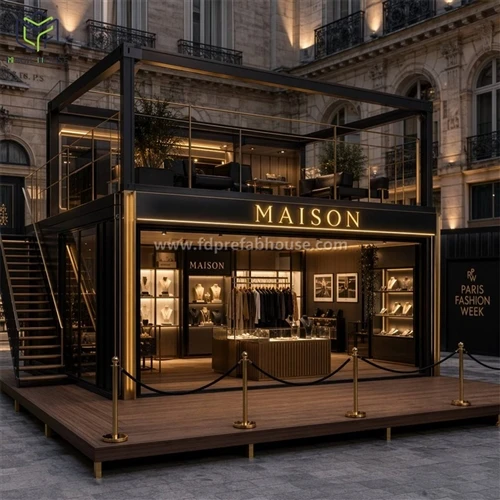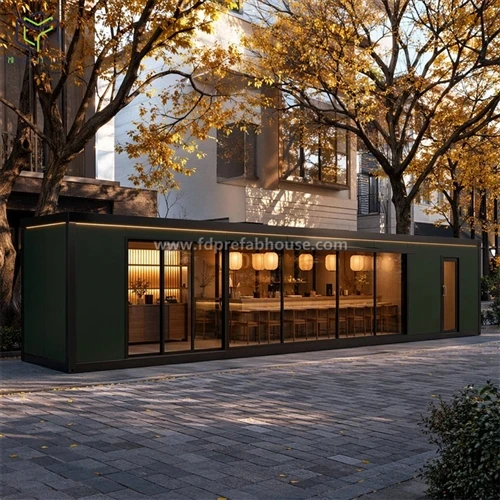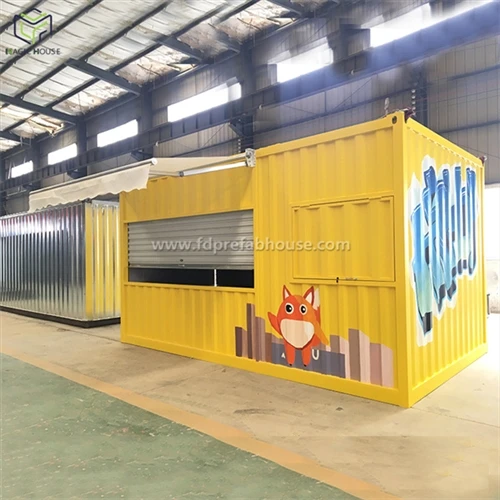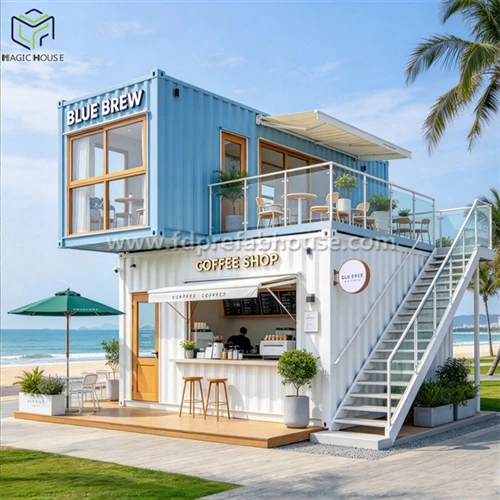
1. The Container Shell
This is your starting point. You have two main options:
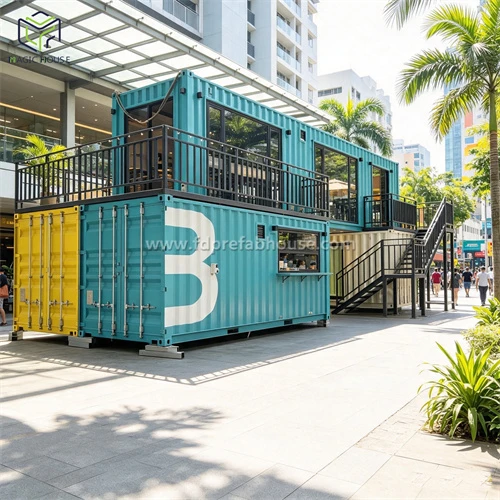
Modified shipping container: A real, used container built for 20 years at sea. Durable, with an authentic industrial look.
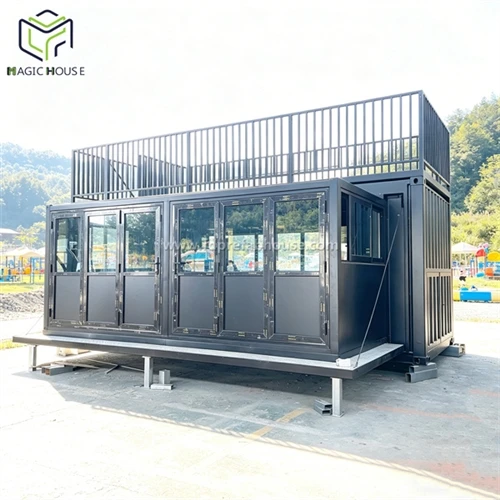
Prefab container house unit: A brand-new modular unit that looks like a container but is often cheaper and easier to transport.
2. Conversion & Fit-Out
This is where the shell becomes a shop.
Key cost areas include:
Insulation: Standard containers don't come insulated. This is essential for year-round operation.
Electrical work: Lighting, outlets, and power supply. A "plug and play" setup with one main electrical inlet can connect to a standard source or generator.
Plumbing: Commercial food service requires running water. Options range from full plumbing to portable tank systems (fresh water + grey water) with a pump and instant water heater.
Interior finishes: Flooring, wall panels, countertops, and cabinetry.
Serving window: A large hydraulic or awning-style window that opens up the entire space and acts as a service counter.
3. Equipment
You don't need a $25,000 La Marzocco to start. A good commercial grinder and espresso machine can be acquired at reasonable prices, and the used equipment market offers significant savings.
Australian benchmarks for commercial equipment:
Commercial coffee machine: AUD 12,000–30,000
Grinder: AUD 1,500–4,000
4. Site Preparation & Logistics
Don't forget these often-overlooked costs:
Delivery & crane rental: Getting the container to your site and positioning it
Groundwork: A level, stable surface is essential
Utility connections: Water, power, and waste disposal hookups
Permits & licensing: Health, safety, and food service permits vary by jurisdiction
5. Operating Costs
Container cafés offer dramatically lower operating costs than traditional shops:
Rent: Instead of a long-term commercial lease, you pay ground rent for the space you occupy-often a fraction of traditional retail rent.
Utilities: Compact, efficient layouts reduce energy consumption.
Maintenance: Steel containers are durable and weather-resistant, with design lives of 25+ years.
Real-World Success Stories
DripBox Coffee, Austin, TX (USA)
Build: 20ft custom container
Investment: ~$35,000
Revenue: $280,000/year (first location)
Key result: Broke even in 8 months; expanded to 3 locations in 2 years
SkySip Rooftop Bar, Miami, FL (USA)
Build: 2 stacked 40ft containers with rooftop seating
Investment: ~$120,000
Revenue: ~$500,000/year
Key result: Doubled revenue in year two; zero property costs through partnership
Plato Coffee, South Africa
Origin: A single shipping container in Centurion
Outcome: Expanded to 50+ stores nationwide in under five years
TacoCueva, Sacramento, CA (USA)
Build: 40ft container with outdoor patio
Investment: $70,000
Outcome: Expanded to brick-and-mortar + food truck fleet; kept original container running at festivals
Key Considerations Before You Start
Permits & Licensing
Every jurisdiction has different requirements. You'll need health department approval, food service permits, and often zoning or planning permission for the container itself. Some areas treat containers as temporary structures with streamlined permitting; others require full building code compliance. Research your local regulations thoroughly before purchasing a container.
Container Selection
Start with a container that is structurally sound, dry, and clean enough for food-service conversion. A 20ft container (about 150 sq. ft.) is the most popular size-ideal for cafés with light food service. A 40ft container offers more space for kitchen, seating, and storage.
Climate Considerations
Standard containers don't have insulation. If you're operating through cold winters or hot summers, budget for proper insulation and climate control.
The "Pop-Up" Mindset
One of the biggest advantages of the container model is mobility. You can test locations, follow seasonal traffic, and adapt to changing markets. This flexibility is a superpower that traditional cafés simply don't have.
Is a Container Coffee Shop Right for You?
Container coffee shops aren't for everyone. But for entrepreneurs who want to enter the coffee market with lower risk, faster launch times, and greater flexibility, they represent one of the most compelling opportunities available today.
The numbers speak for themselves: 30–50% lower startup costs compared to traditional builds, launch times measured in weeks rather than months, and the ability to move your entire business if conditions change. In an industry where fixed overheads are the number one killer of new businesses, container coffee shops offer a smarter, more resilient path forward.
Whether you're in New York, London, Sydney, or Toronto, the container café revolution is already underway-and it's only just beginning.