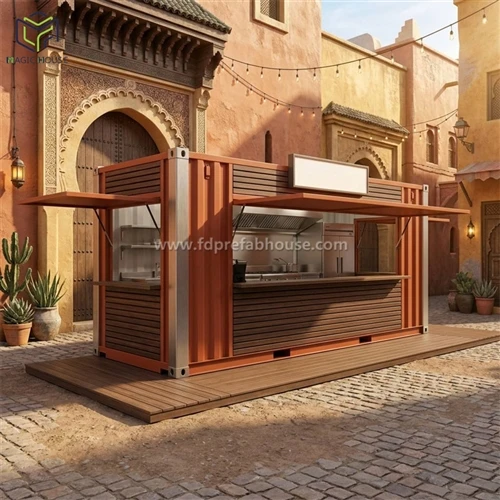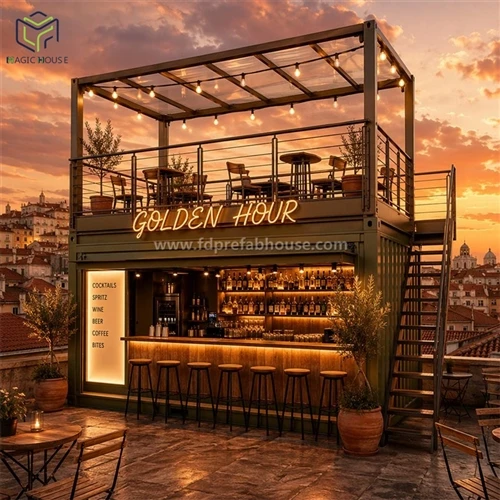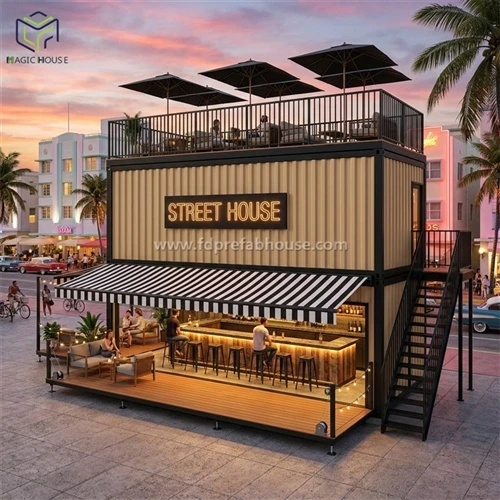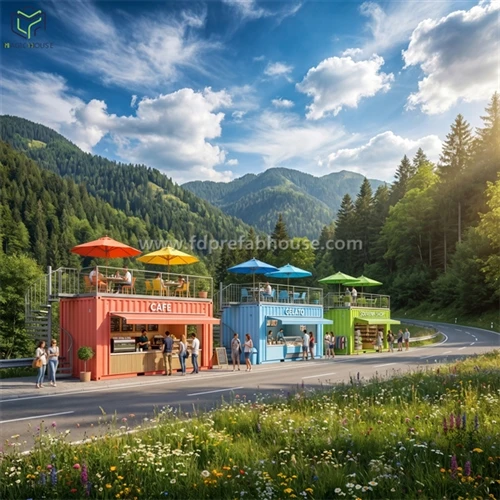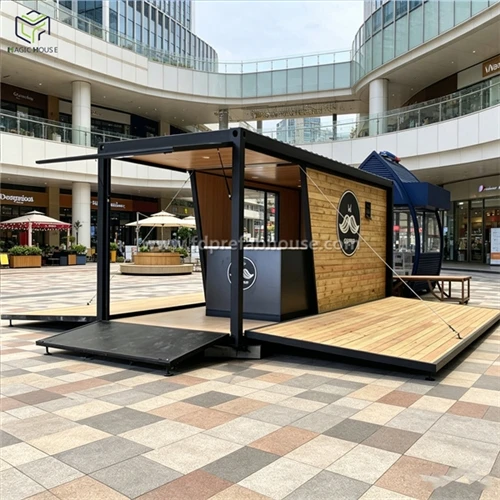
Container cafés are commonly used in parks, commercial streets, tourist areas, and outdoor leisure spaces. Compared with standard container buildings, container cafés usually have more openings, modifications, and interior equipment requirements, which creates additional considerations for corrosion protection.
During manufacturing, container cafés often require structural modifications, including door and window openings, equipment connections, service counters, and external decorative components. These processing areas can affect the original protective condition of the steel structure and may become vulnerable points if they are not properly treated.
After fabrication, key areas such as weld seams, cut edges, and connection points require inspection and additional corrosion protection. These areas are usually cleaned, treated, and recoated to maintain continuous protection across the steel surface.
For outdoor container cafés used in Australia, New Zealand, the United States, and Canada, the structure is exposed to sunlight, rain, humidity, and, in some coastal areas, salt spray. Exterior coating systems need to provide sufficient resistance against moisture, UV exposure, and weather changes to reduce long-term maintenance requirements.
Interior moisture control is also an important consideration. Café environments usually involve water usage, cleaning areas, and temperature differences that may create condensation. If insulation, moisture barriers, or ventilation systems are not properly designed, condensation may affect internal steel components.
Corrosion protection is not simply about applying thicker coatings. It requires a combination of proper material preparation, manufacturing processes, and structural design to reduce the impact of long-term outdoor exposure on steel components.