One Container, Three Distinct Climatic Challenges
In Singapore, temperatures hover between 30–34°C year-round with humidity exceeding 80%. In the Australian outback, summer temperatures can soar to 45°C. Meanwhile, in New Zealand's South Island, facilities must contend with winter frost and strong coastal winds. When the same 40-foot shipping container is deployed to these three different environments, the design requirements for each vary significantly.
Singapore: Cooling Is More Critical Than You Might Think
Under the equatorial sun, the interior surface temperature of a steel container can exceed 60°C-making it uninhabitable without air conditioning. Our approach includes:
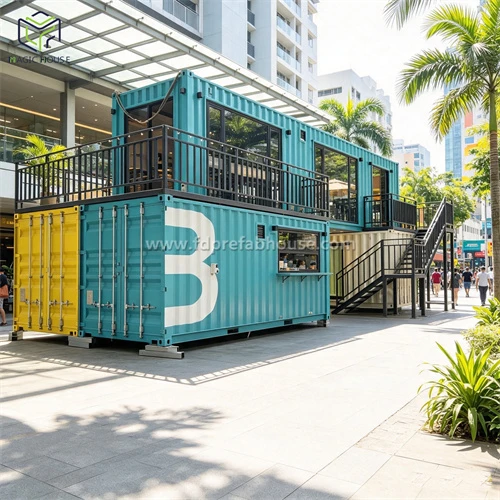
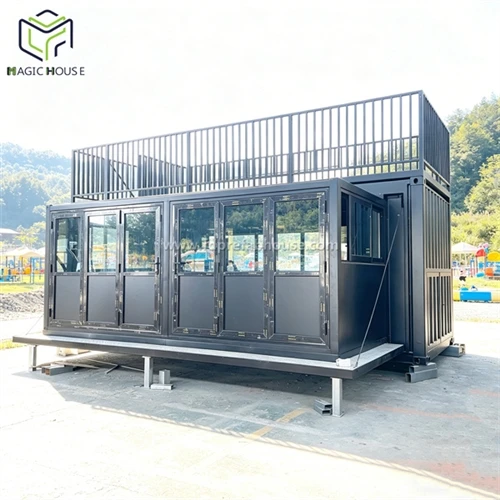
1. High-Reflectivity Exterior Paint: Light colors (white, light gray, pale cyan) can keep the surface 8–12°C cooler than dark colors. If a client prefers a dark aesthetic, we add an **external thermal insulation layer**-lining the corrugated steel panels with 25mm of rock wool and aluminum foil.
2. Roof Ventilation Layer: We incorporate an air gap (ventilation layer) beneath the roof, allowing hot air to escape from both ends.
3. Heat-Rejecting Window Film: To combat intense western sun exposure, we apply UV400 heat-rejection film to floor-to-ceiling windows, blocking 60% of infrared radiation.
4. Air Conditioner Placement: Outdoor AC units for reception areas are positioned on the shaded side of the container to prevent direct sunlight from reducing cooling efficiency.
The Australian Outback: Dust and Temperature Fluctuations
For charging stations ranging from Darwin to Alice Springs, the challenges shift:
Dust: All ventilation openings are equipped with removable, washable dust filters, and container doors are fitted with triple-layer weatherstripping.
Diurnal Temperature Variation: With daytime highs of 45°C and nighttime lows of 15°C, the thermal expansion and contraction of the steel can cause stress concentrations at weld seams. When cutting large openings, we use rounded corners (radiused transitions) instead of sharp, right-angled corners to prevent cracking.
Corrosion Resistance: While inland mining areas may have lower salinity than coastal regions, the air often contains fine iron particles. Consequently, we use a fluorocarbon topcoat rather than standard polyurethane paint. New Zealand: Rain and Wind Protection
Roof Pitch: While standard shipping containers have an inherent slope, the addition of skylights or equipment openings creates potential leak points. These must be sealed using **EPDM waterproofing membranes secured with stainless steel clamping strips**.
Wind Loads: Balcony railings and external staircases are the components most exposed to wind. For projects in New Zealand, we adjust the railing posts-increasing their dimensions from 60×60 to 80×80-to comply with local wind zone requirements.
Thermal Insulation: In Christchurch, where winter temperatures can drop below 5°C, we install 50mm of glass wool insulation within the walls and add a layer of XPS (extruded polystyrene) foam boards beneath the flooring.
A Standard for Assessment
When clients describe their site, we ask for three key figures: the extreme maximum summer temperature, annual rainfall, and the local wind zone classification. These data points dictate the thickness of the thermal insulation, the color system for the exterior finish, and the specifications for the anchor bolts-ensuring decisions are based on precise requirements rather than guesswork.