
1. Overview
Equipment selection is one of the core tasks in swimming pool engineering. Proper equipment configuration directly determines water quality safety, operating energy consumption, and maintenance costs. Pool equipment mainly falls into four categories: circulation and filtration systems, disinfection systems, heating systems, and auxiliary equipment. Selection must consider pool type, size, usage scenario, and budget.
2. Circulation and Filtration System Selection
The circulation and filtration system is the core equipment for keeping water clear and hygienic.
Pump selection:
Choose high‑efficiency variable‑speed pumps.
Flow rate calculation based on pool volume: generally, circulation is designed for 1–2 turnovers per hour, or for residential pools, a full turnover in 6–8 hours.
Selection principles: low power, high flow, low noise.
Filter selection:
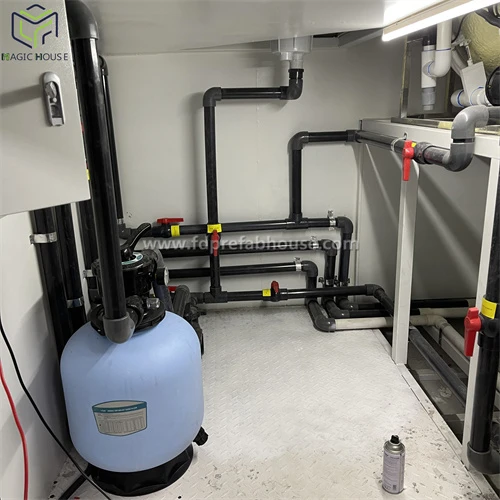
Sand filters: cost‑effective, easy to maintain, suitable for most pools; require regular backwashing.
Diatomaceous earth (DE) filters: higher filtration precision (down to 1–3 μm), ideal for high‑end hotels or strict water‑quality requirements.
Integrated wall‑mounted units: suitable for spaces without a plant room or for outdoor pools; integrate filtration and circulation, saving space.

3. Disinfection System Selection
Disinfection equipment eliminates bacteria and viruses, ensuring water safety.
Salt chlorine generators (electrolysis): generate chlorine by electrolysing salt water; suitable for residential pools, reducing chemical irritation.
UV sterilizers: no chemical residues; require a small amount of residual chlorine for lasting effect; good for sensitive skin.
Ozone disinfection: highly effective against viruses; commonly used in large commercial pools.
Copper‑silver ion systems: mild disinfection, suitable for sensitive skin, but higher cost.
4. Heating System Selection (for heated pools)
Air‑source heat pumps: most energy‑efficient (COP 4–6); suitable for long‑term use, but efficiency drops at low ambient temperatures.
Solar heating: environmentally friendly, but depends on sunlight; needs an auxiliary heat source.
Gas boilers: rapid heating, suitable for intermittent use, but higher operating costs.
5. Auxiliary Equipment
Automatic pool cleaners: fully robotic cleaners offer high efficiency.
Water quality monitors: real‑time measurement of pH, residual chlorine, and other key parameters.
LED underwater lights: energy‑efficient, long life (about 30,000 hours).
Pool covers: prevent debris ingress and reduce heat loss.
6. Key Selection Principles
Quality first: choose qualified manufacturers; review project references and certifications (e.g., CE, NSF).
Energy efficiency priority: variable‑speed equipment can save more than 30 % energy compared to fixed‑speed units.
Scenario‑specific: residential pools favour low noise and low chlorine irritation; commercial pools require strong disinfection and intelligent monitoring.
Budget‑aware: equipment cost typically accounts for 30 %–50 % of total pool construction cost.
Professional design: engage a specialised company to provide customised solutions, ensuring that equipment parameters precisely match pool volume and usage requirements.