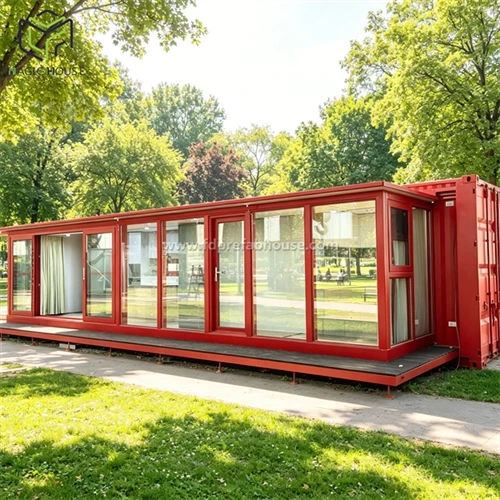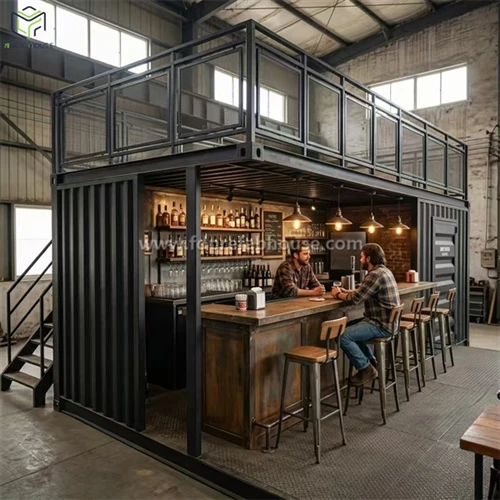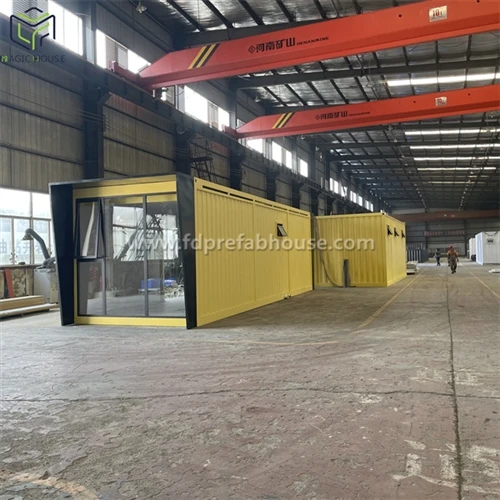
Many customers have concerns about the safety of container houses, especially regarding earthquake resistance, fire protection, and sound insulation. In fact, with scientific design and high‑quality materials, modern container houses can meet or even exceed the safety standards of traditional buildings.
Seismic performance mainly comes from their strong steel frame structure. Standard container houses use Q235B steel with a yield strength of 235 MPa and tensile strength exceeding 370 MPa, combined with welded joints to form a rigid structural system. In vibration table tests simulating a seismic fortification intensity of 7 degrees, container houses showed no obvious deformation under a horizontal acceleration of 0.15g (equivalent to a magnitude‑6 earthquake). When the acceleration was increased to 0.2g (near a magnitude‑7 earthquake), only slight displacement occurred, and the main structure remained intact. In actual applications, container shelters used in an earthquake‑stricken area showed wall cracks only 0.1‑0.3 mm wide after a 5.8‑magnitude quake, well below the 0.5 mm safety limit specified in the Code for Seismic Design of Buildings.
Fire resistance: Container houses typically use Class A non‑combustible materials such as rock wool and glass wool as thermal insulation for walls and roofs. According to tests by the National Centre for Quality Supervision and Testing of Fire Building Materials, rock wool panels achieve a combustion performance Class A rating and a fire resistance rating of over 2 hours. They do not burn or release toxic gases when exposed to open flames. In simulated fire scenarios, the internal temperature remained below 50°C after one hour of burning, and the external metal surface temperature stayed under 80°C, effectively slowing fire spread.
Sound insulation: Through multi‑layer structural design, container houses achieve noise reduction. Taking a common double‑layer colour‑coated steel sandwich panel with 50 mm thick rock wool filling as an example, laboratory acoustic tests show a weighted sound reduction index of 30‑35 dB, effectively blocking external noise of 60‑70 decibels. If thicker rock wool (75 mm or 100 mm) and additional sealing strips are used, the index can be further increased to over 40 dB. In practical measurements, inside a container dormitory near a busy main road, indoor noise levels dropped from 65 dB to 45 dB after additional soundproofing measures were installed.
It is worth noting, however, that unmodified standard freight containers do have poor thermal and acoustic insulation. Therefore, when purchasing container houses, buyers must confirm that the manufacturer uses qualified insulation materials and professional construction techniques.