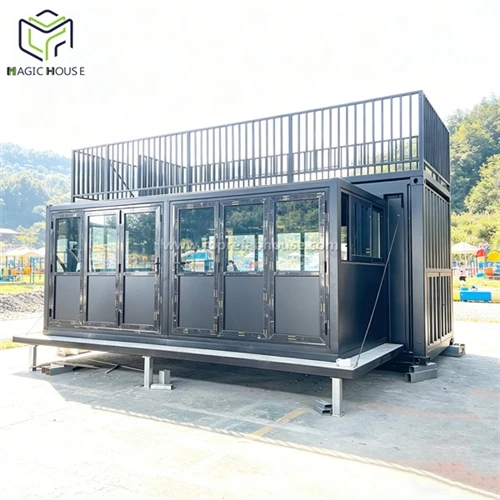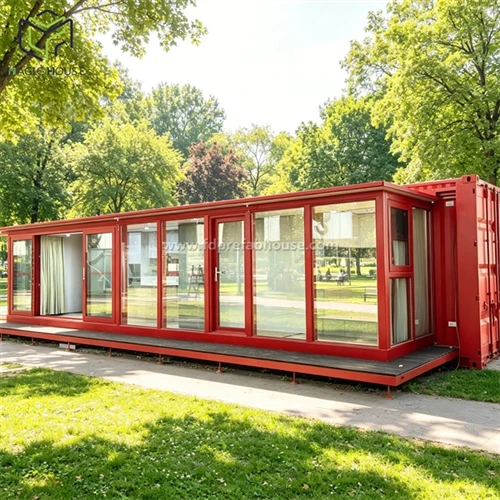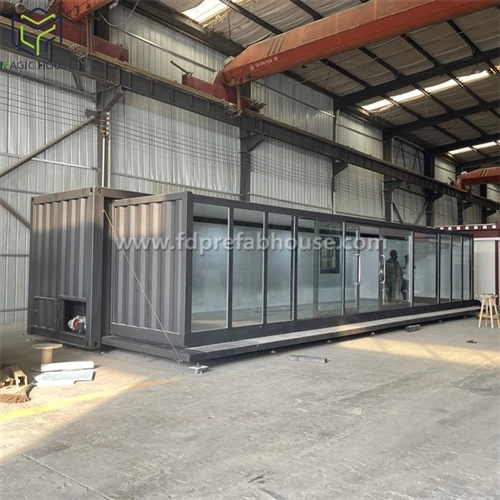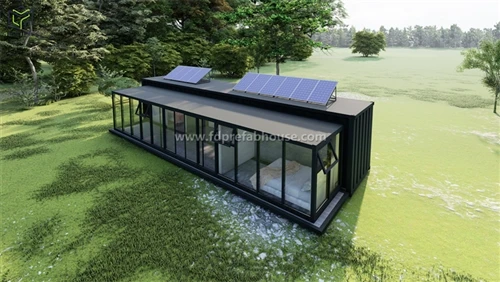
With the rapid development of prefabricated construction, the application of container houses has expanded from traditional temporary construction site facilities to diverse sectors such as cultural tourism homestays, commercial retail units, and municipal emergency shelters. However, the market is crowded with manufacturers offering varying levels of quality; identifying a truly professional partner among hundreds of suppliers poses a challenge for many buyers. This article outlines a comprehensive methodology for selecting a container house supplier, focusing on four key dimensions: qualification verification, factory inspection, materials and craftsmanship, and contract execution.

I. Qualification Verification: Essential Indicators of Compliant Operations
The first step in selecting a supplier is verifying their business qualifications. This establishes whether the enterprise operates legitimately and whether product quality is assured.
Key Qualification Checklist:
Business License: Ensures the manufacturer is a legally registered business entity.
Steel Structure Engineering Contracting Qualification: A crucial guarantee of structural safety; designs must comply with national standards such as the *Code for Design of Steel Structures* (GB 50017).
ISO 9001 Quality Management System Certification: Demonstrates the manufacturer's adherence to standardized quality management processes.
Fire Safety and Product Safety Test Reports: Confirms compliance with relevant national safety standards; fire resistance ratings should meet Class A requirements.
Environmental Certification: The eco-friendliness of materials directly impacts user health.
Note: Exercise caution if a manufacturer cannot provide the aforementioned qualifications to avoid future quality issues or legal disputes. Be particularly wary of "shell companies" that lack fixed production facilities or complete credentials.

II. Factory Inspection: Seeing Is Believing
"Seeing is believing" remains the most effective way to assess a supplier's capabilities. Buyers are advised to conduct on-site inspections of the manufacturing base and evaluate the supplier based on the following dimensions:
1. Production Scale and Capacity
Assess the facility's footprint, production line configuration, workforce size, and warehouse shipping activity. A legitimate manufacturer should own its production base and automated production lines, capable of fulfilling large-volume or urgent orders. If the supplier lacks its own workshop and acts merely as an intermediary profiting from price markups, product quality lacks unified control, and the cost of resolving future issues can be high. 2. R&D and Design Capabilities
Assess whether the manufacturer has an in-house design team capable of providing comprehensive design solutions covering everything from structural and electrical systems to interior fit-outs. Top-tier manufacturers offer not only standard units but also robust capabilities in spatial design, modular configuration, and personalized customization.
3. Past Project Portfolio
Review the manufacturer's track record of successful projects, particularly those similar to your own requirements. Suppliers with experience across diverse applications-such as commercial districts, homestays, and office spaces-are better equipped to understand and execute non-standard, customized designs.
4. End-to-End Service Capabilities
Prioritize reputable manufacturers that offer integrated services covering design, production, transportation, installation, and after-sales support. One-stop service capabilities are crucial for ensuring smooth project execution and controlling overall costs.

III. Materials and Craftsmanship: The Core of Quality
The quality of a container home depends largely on the materials used and the manufacturing craftsmanship. When evaluating and inspecting products, focus on the following key indicators:
1. Structural Steel
Reputable products utilize thickened galvanized steel structures, such as Q235 or Q345 grades. High-quality units typically feature steel with a thickness of at least 1.2mm. Be wary of manufacturers that market "thickened panels" while actually using thin sheet metal; such products are prone to structural deformation and weld cracking within just two or three years.
2. Wall Insulation Materials
Wall sandwich panels must utilize fire-resistant, insulating materials such as rock wool or glass wool. Rock wool panels offer a Class A fire rating alongside excellent thermal and acoustic insulation properties. Avoid flammable polystyrene panels at all costs.
3. Waterproofing and Anti-Corrosion Treatment
Check the roof for waterproofing treatments and ensure that all joints are tightly sealed. For use in coastal or humid regions, opt for galvanized containers, which offer superior corrosion resistance.
4. Welding Craftsmanship
Inspect the welds to ensure they are smooth and secure; the quality of welding directly impacts the unit's airtightness and durability.
5. Flooring and Utilities (Plumbing/Electrical)
Flooring should consist of non-slip concrete or cement-based materials; avoid low-density boards that are prone to cracking underfoot. All electrical wiring and plumbing lines must be routed through compliant protective conduits to prevent issues such as aging or short circuits during use.

IV. Contract Signing: Clarity of Rights and Obligations as a Safeguard
A contract with clearly defined rights, obligations, and rigorous terms is the primary tool for mitigating transaction risks and protecting the interests of both parties. When signing the contract, ensure the following details are clearly specified:
1. Detailed Product Specifications
Clearly document details such as materials, dimensions, model specifications, and manufacturing standards in the contract to prevent disputes arising from ambiguous product descriptions.
2. Price and Costs
Confirm whether the quoted price includes additional costs-such as transportation, hoisting, and installation-to avoid unexpected price hikes later. All costs must be itemized clearly; vague terms are not acceptable.
3. Delivery Schedule
Clearly define the timelines for production and delivery. Reputable manufacturers with stable production capacity can ensure on-time delivery.
4. Acceptance Criteria
Agree upon the acceptance process and standards. Upon receipt, inspect the product for structural deformation, the sealing of doors and windows, electrical systems, waterproofing, and other key aspects; sign for the delivery only after confirming everything is in order.
5. After-Sales Warranty
Clearly specify the warranty period (typically 1–3 years), the procedure for addressing quality issues during this period, and the response time for resolving problems. Aim to secure a longer warranty period for critical components, such as the waterproofing layer.