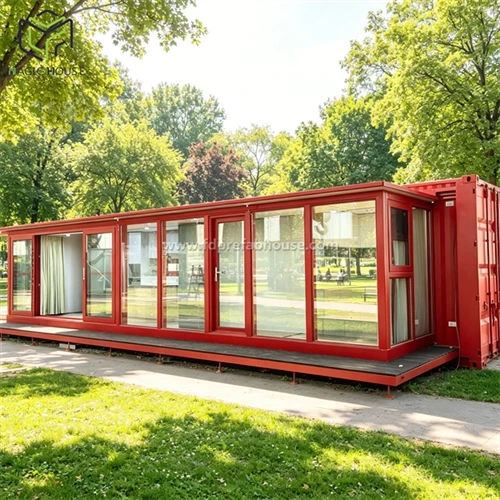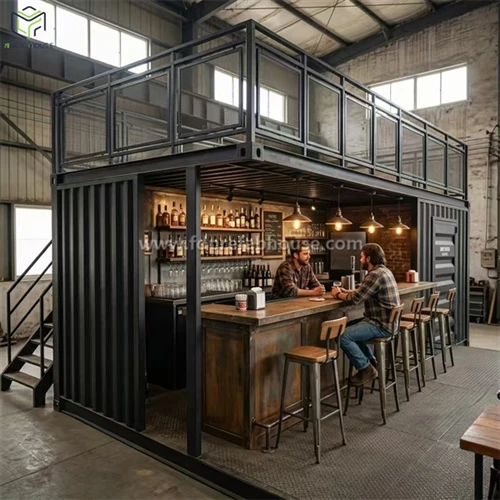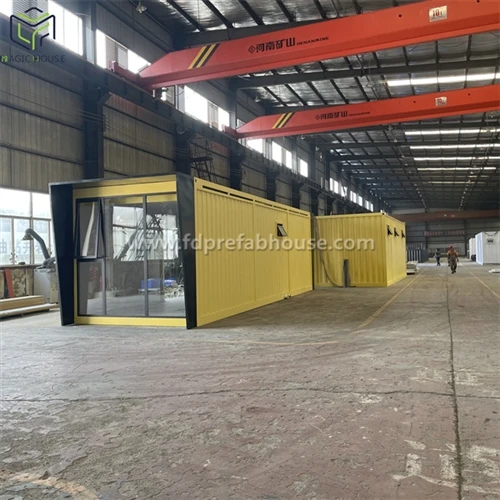
**Overview of Application Scenarios**
This document aims to provide a systematic purchasing guide for clients interested in acquiring container-based modular housing. It covers critical aspects such as product specifications, quality certifications, packaging and shipping arrangements, trade terms, and after-sales support. The goal is to enable buyers to communicate effectively with suppliers and mitigate transaction risks arising from information asymmetry. This guide is applicable to various scenarios, including temporary offices, construction site accommodation, camp construction, commercial displays, and residential housing.
**I. Confirmation of Product Specifications and Customization**
Before entering into commercial negotiations, buyers should clearly define their requirements and verify the following product parameters with the supplier item by item:
**1.1 Product Type Classification**
Container housing products currently on the market generally fall into two categories:
**Converted Container Units:** Standard shipping containers modified internally; typically used for basic accommodation.
**Modular Building Products:** Standardized building modules specifically designed for residential, office, or commercial display purposes; these feature superior structural design, thermal insulation, and utility systems (plumbing and electrical).
Chengdu Fangda Mofang's products belong to the latter category. Buyers should confirm the product type based on their intended use to avoid functional mismatches. 1.2 Key Specifications
Item Description
Standard Dimensions 20-foot (expanded): approx. 5900 × 6300 × 2480 mm; 40-foot (expanded): approx. 11800 × 6360 × 2480 mm
Custom Dimensions Non-standard sizes available upon request; minimum order quantity (MOQ) and lead times must be confirmed in advance
Wall Materials Options include rock wool sandwich panels (Class A fire rating), polyurethane sandwich panels (superior thermal insulation), etc.
Structural Frame Galvanized steel frame; surface treatment specifications (e.g., coating method, galvanization thickness) must be clearly defined
Exterior Color Standard color chart provided; customization via Pantone color codes supported
1.3 System Configuration Confirmation
A complete container housing unit typically comprises the following systems:
Structural system (base frame, columns, roof frame, connectors)
Enclosure system (walls, roofing, doors, and windows)
Electrical system (lighting, sockets, distribution box)
Plumbing system (if bathroom/sanitary facilities are included)
Interior finishing (flooring, wall finishes)
The purchaser should verify the configuration standards and material brands for each system.
II. Quality Certification and Standards Verification
Quality certification serves as a key basis for evaluating a supplier's production capabilities and product compliance. Purchasers are advised to verify the following qualification documents before signing a contract.
2.1 Fundamental System Certifications
ISO 9001: Quality Management System certification; reflects the supplier's level of standardization regarding production process control and quality traceability. 2.2 Market Access Certification for Exports
Target Market Required Certification Notes
European Union CE Certification + EN 1090 Mandatory requirement for steel structure products entering the EU market; requires verification by a Notified Body.
Australia/New Zealand AS/NZS Standards Covers requirements for structural design, fire resistance, wind resistance, etc.
North America Compliance with IBC Codes Specific certification requirements depend on the state or province where the project is located.
Middle East/Africa Subject to project requirements Some projects require third-party inspection reports (e.g., from SGS).
Special Note: For container houses exported to the EU, the EN 1090 standard has been mandatory since July 1, 2014; products generally must meet the EXC 2 execution class. Purchasers should require suppliers to provide a valid CE certificate and a Declaration of Performance (DoP) document.
2.3 Product Performance Specifications
Purchasers are advised to request the following performance test reports from suppliers:
Fire resistance rating test report (GB/T or EN standards)
Thermal insulation parameters (U-value/heat transfer coefficient)
Structural load-bearing capacity (seismic and wind resistance ratings)
Waterproofing and sound insulation performance data
III. Packaging and Transportation Arrangements
Container houses are bulky and heavy; packaging and transportation are critical factors affecting both cost and safety. The following items should be clearly specified in the contract.
3.1 Loading Quantity and Layout
Product Specifications Reference Loading Quantity Remarks
20ft expandable unit / container house / container café / container pool 2 units per 40ft High Cube (HC) container Subject to actual product dimensions
40ft expandable unit / container house / container café / container pool 1 unit per 40ft High Cube (HC) container Subject to actual product dimensions
The supplier shall provide recommendations for the loading layout, including:
Stacking method for products within the container
Plans for the use of securing materials such as straps, wooden battens, and dunnage bags
3.2 Packaging Standards
Export packaging must meet the following basic requirements:
Waterproofing: Wrap with waterproof film or stretch wrap
Shock protection: Install cushioning materials at critical points
Clear labeling: Mark the outer packaging with shipping marks, gross weight, net weight, dimensions, port of destination, etc.
Verification of shipping marks: Shipping marks, container numbers, and seal numbers must match the packing list and bill of lading
3.3 Weight Limits
The total weight of the cargo inside the container must not exceed the container's maximum payload. Gross Weight (GW) and Tare Weight (TARE) are marked on the container door. Overloading poses transportation safety risks and the risk of fines at the destination. 3.4 Key Documents
Upon completion of packing, the supplier shall provide the purchaser with a complete Packing List, itemizing the following for each package:
Shipping marks and package numbers
Gross weight and net weight of each package
External dimensions of each package
Total number of packages and total weight
IV. Trade Terms and Payment Conditions
4.1 Common Trade Terms
Term Meaning Point of Risk Transfer Recommendation
EXW Ex Works Upon pickup by the buyer Suitable for buyers familiar with logistics
FOB (e.g., FOB Shanghai) Free on Board Upon loading onto the vessel Buyer arranges insurance and onward transport
CIF (e.g., CIF Rotterdam) Cost, Insurance, and Freight Upon loading onto the vessel (risk transfers, but seller covers freight and insurance) Suitable for buyers seeking simplified operations
Note: Trade terms directly affect the price structure and risk allocation; specific ports must be clearly stipulated in the contract.
4.2 Payment Methods
Common payment arrangements include:
Telegraphic Transfer (T/T): 30% down payment + 70% balance (payable before shipment or upon presentation of a copy of the Bill of Lading)
Letter of Credit (L/C): Sight or Usance L/C; suitable for large-value orders
4.3 Delivery Lead Time
Typically 15–30 days for standard products; 30–45 days for customized products, depending on complexity. The purchaser should clearly specify the delivery date and liability clauses for delayed delivery in the contract.
V. Document Preparation and Customs Clearance
5.1 Basic Export Documents
Commercial Invoice
Packing List
Bill of Lading
Sales Contract
Certificate of Origin (depending on destination country requirements)
Inspection Certificate (if required)
Key Principle: All document contents must be consistent, ensuring "consistency among documents" and "consistency between documents and goods." 5.2 Requirements for Wood Packaging
If wood materials (such as wooden pallets or battens) are used in the packaging, they must comply with ISPM 15 (International Standards for Phytosanitary Measures No. 15) requirements. The wood packaging must undergo heat treatment or fumigation and bear the IPPC mark.
5.3 Compliance Notice for Destination Country
The purchaser is responsible for understanding the destination country's requirements regarding container building products, including:
Building regulations and approval processes
Local structural, fire safety, and general safety standards for prefabricated buildings
Import tariff and VAT policies
Special certification or inspection requirements
VI. After-Sales Service and Warranty
6.1 Warranty Policy
Chengdu Fangda Mofang provides:
Structural warranty: 1 year (subject to specific contract terms)
Free repair or replacement for quality issues not caused by human error
6.2 Technical Support Services
Installation manuals (illustrated; Chinese/English versions available)
Remote video guidance
On-site technical guidance available (fees to be negotiated separately)
6.3 Spare Parts Supply
Common spare parts (door and window hardware, sealing strips, electrical switches, etc.) are kept in stock to ensure rapid replacement.
VII. Special Risk Warnings
7.1 Land Use Compliance Risks
The use of container buildings in certain regions may be restricted by land-use classification, architectural planning, zoning regulations, etc. Purchasers are advised to verify compliance with local authorities regarding the use of container houses before project commencement.
7.2 Transportation Risks
Delays during sea freight may occur due to force majeure factors such as weather, port congestion, or customs inspections. Purchasers are advised to:
Include force majeure clauses in the contract
Purchase appropriate transport insurance based on the cargo value
Allow for a reasonable project schedule buffer
7.3 Documentation Risks
The purchaser is generally liable for any customs clearance delays, fines, or cargo detention resulting from inaccurate customs declaration information provided by the purchaser. Please ensure that all details-such as consignee information, HS codes, and declared values-are accurate before shipment.