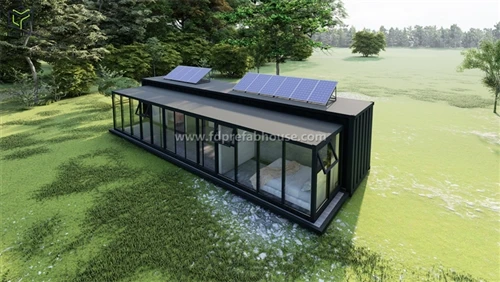
Key concept: The energy storage capacity for an off-grid solar container system depends on three variables: average daily power consumption (kWh), the desired number of days of autonomy, and the battery's usable depth of discharge (DoD). For lithium iron phosphate (LiFePO4) batteries, the usable DoD is typically estimated at 80%–90%. The calculation formula is:
Nominal Battery Capacity (kWh)=(Average Daily Power Consumption × Days of Autonomy)/Usable Depth of Discharge
For example, with an average daily consumption of 15 kWh, a requirement for 3 days of autonomy, and a LiFePO4 battery with a 90% DoD, the necessary nominal capacity would be approximately 50 kWh. Furthermore, a hybrid AC/DC power distribution system offers a distinct advantage: DC loads-such as air conditioners and LED lighting-can draw power directly from a DC bus. This eliminates the conversion losses associated with "DC→AC→DC" processes, effectively increasing the available energy when rooftop solar space is limited.
Value for the client: When requesting a quote, if a client provides a load list (device power rating × daily operating hours) and the desired number of days of autonomy (to cover cloudy or rainy periods), the system provider can calculate an appropriate battery capacity-moving beyond vague, subjective promises that a system will simply be "enough." Conversely, if a client attempts to estimate system adequacy solely based on the number of rooftop solar panels, they are highly likely to underestimate the power required for nighttime or overcast conditions.