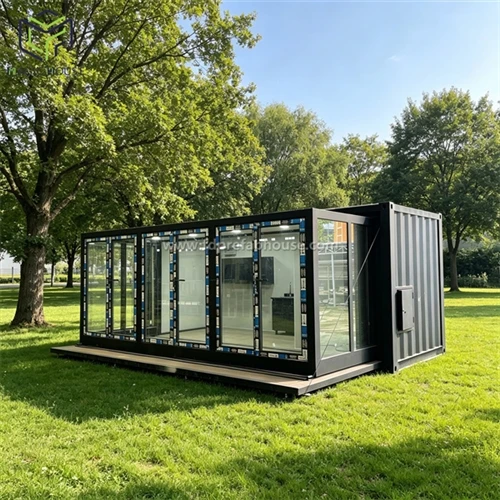
Counter-Current Units for 40-Foot Container Pools: Divergent Selection Logic for Northern vs. Southern Europe
The counter-current unit is the core component enabling "lap swimming" in a container pool, yet buyer requirements vary significantly across markets. Factors such as ambient temperature, usage frequency, guest demographics, and electrical standards dictate the appropriate configuration.
What Is a Counter-Current Unit and Why Do Container Pools Need One?
A counter-current unit uses a pump to drive nozzles or turbines, creating a directional water flow that allows swimmers to swim against the current in a stationary position, thereby enabling continuous training within a limited pool length. For a 40-foot container pool (typically with an internal length of around 12 meters), the actual usable swimming length is even shorter; thus, a counter-current unit is essentially a prerequisite for the pool to offer a genuine swimming experience.
Single-Turbine vs. Dual-Turbine: Usage Determines the Choice
Single-turbine units are suitable for residential and light-duty applications; they offer relatively limited flow intensity and width, making them ideal for casual swimming by short-term rental guests. Dual-turbine systems deliver higher flow rates and wider currents, catering to competitive swimmers, triathletes, and commercial facilities. While a single-turbine unit usually suffices for Airbnb-style rentals, a dual-turbine system offers a noticeably superior experience if the target clientele includes fitness enthusiasts or serious trainees.
Configuration Differences Across Markets
High-temperature markets (e.g., Australia, the Middle East): Heat dissipation and UV resistance are critical; the equipment compartment's ventilation design must withstand sustained high temperatures.
Temperate markets (e.g., Northern Europe, the UK, Canada): Counter-current units are often paired with heating systems. If the water temperature is too low, guests will not enter the pool, leading to reduced usage of the counter-current unit. The container's insulation thickness and the heater's power output must be matched to the unit's flow rate.
Markets with strict electrical standards (e.g., Germany, the Netherlands): The counter-current unit's motor protection rating and grounding configuration must comply with DIN VDE 0100-702 or equivalent standards. Adequate space for maintenance must be reserved within the equipment compartment, and electrical connections must be easily accessible for operation by a local licensed electrician.
Matching the Counter-Current Unit with the Filtration System
Counter-current units agitate large volumes of water during operation; if the filtration system lacks sufficient circulation capacity, water quality will deteriorate rapidly. For 40-foot container pools, the specifications for circulation pumps and filters should be determined based on the counter-current unit's maximum flow rate, rather than solely on the pool's water volume. In the context of vacation rentals-where guest usage is frequent and concentrated within specific timeframes-it is recommended to incorporate a filtration system capacity margin of at least 30%.