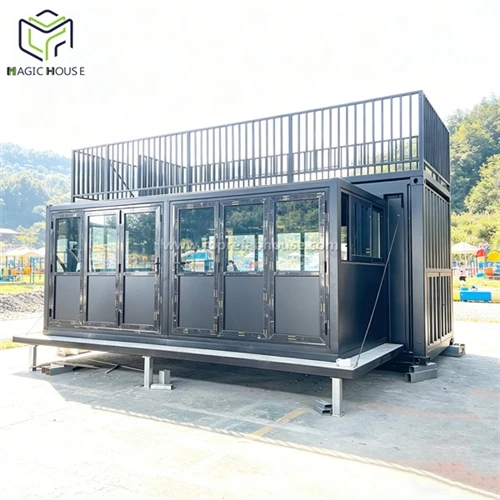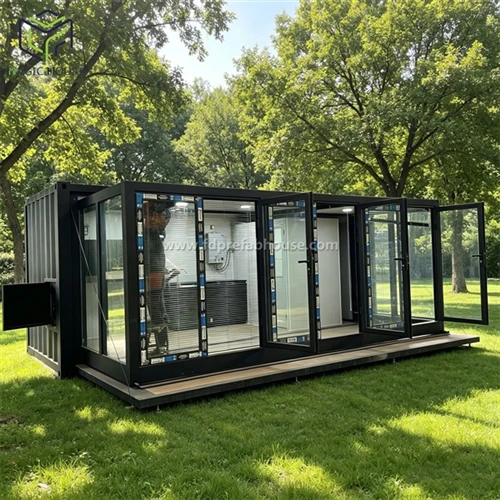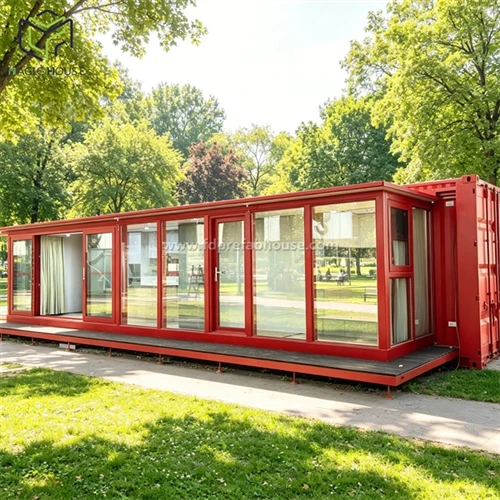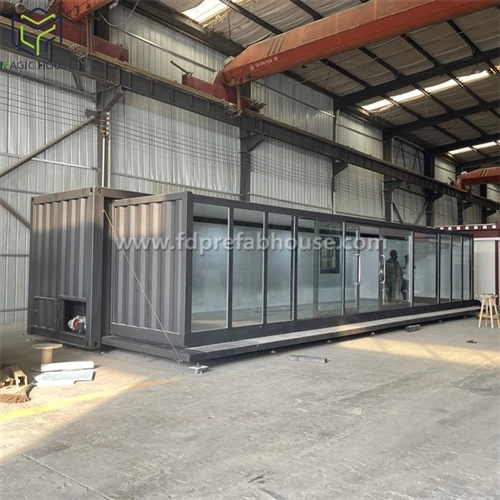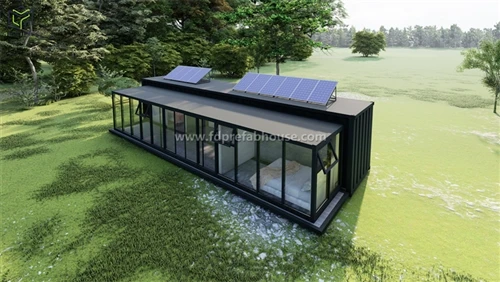
Container architecture is no longer just a simple "metal box." Chengdu Fangda Magic House actively embraces new materials and digital tools, making its products more energy-efficient, intelligent, and aesthetically pleasing.
1. New Material Applications
Photovoltaic Glass and BIPV: Integrating power-generating glass directly into the container roof or facade achieves Building-integrated Photovoltaics (BIPV). For example, our container cafe and swimming pool projects can be equipped with semi-transparent photovoltaic glass roofs, providing both shading and power generation to meet daily lighting and equipment power needs.
Aerogel Insulation Felt: Traditional rock wool or polyurethane insulation layers are thick, taking up interior space. Aerogel felt only needs 5-10mm to achieve the same insulation effect and has a Class A fire rating, making it ideal for container house renovations in extremely cold or hot regions.
Recycled Plastic Composite Panels: Used for interior partitions or decorative surfaces in container toilets, these panels are waterproof, antibacterial, formaldehyde-free, and 100% recyclable, aligning with the circular economy concept.
Phase Change Material (PCM): PCM microcapsules are embedded in walls or ceilings, absorbing excess heat during the day and releasing it at night, significantly reducing air conditioning energy consumption. Pilot applications have already been implemented in high-end container homestay projects.
2. AI Applications in Design and Construction
AI-Assisted Generative Design: We utilize AI tools (such as Midjourney and Stable Diffusion) to quickly generate concept renderings-clients only need to describe "seaside, industrial style, two-story container café with a terrace," and AI can provide multiple initial design drafts within minutes, significantly shortening the initial communication cycle.
Intelligent Structural Optimization Algorithm: By combining finite element analysis software with AI algorithms, the system automatically optimizes container opening positions and column reinforcement schemes, reducing steel usage and lowering costs while ensuring safety.
AI Scheduling and Quality Inspection in Prefabrication: The factory uses an AI vision inspection system to automatically identify welding defects, paint gaps, and other quality issues; the intelligent scheduling system adjusts production plans in real time based on order priority and inventory, shortening delivery cycles by more than 30%.
Digital Twin and Remote Delivery: A corresponding digital twin model is created for each container module before it leaves the factory. Overseas customers can view a virtual disassembly of the internal pipelines, insulation layers, and steel structure via a web interface, achieving "acceptance before delivery."
3. Intelligent Operation and Maintenance Technology
For commercial applications such as container swimming pools and cafes, we introduce:
IoT Sensors: Real-time monitoring of pool water quality, temperature, and equipment operating status, automatically adding chemicals or triggering alarms.
Remote Energy Management: Control of air conditioning, lighting, and photovoltaic energy storage systems via a mobile app, particularly suitable for unattended mobile toilets, convenience stores, and other similar scenarios.
These cutting-edge technological applications transform Chengdu Fangda Magic House's products from mere building units into green, intelligent, and efficient space solutions.