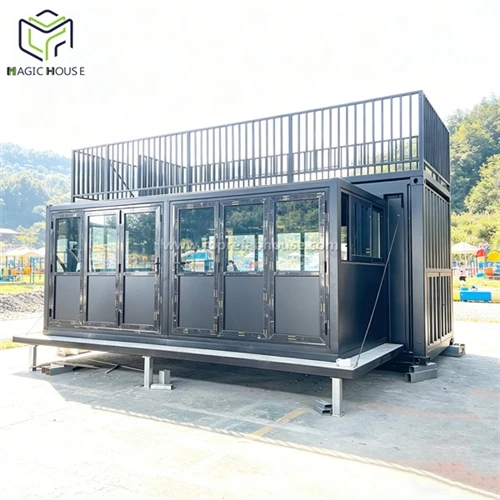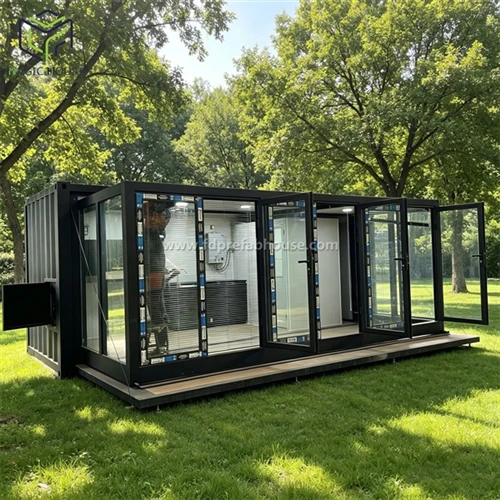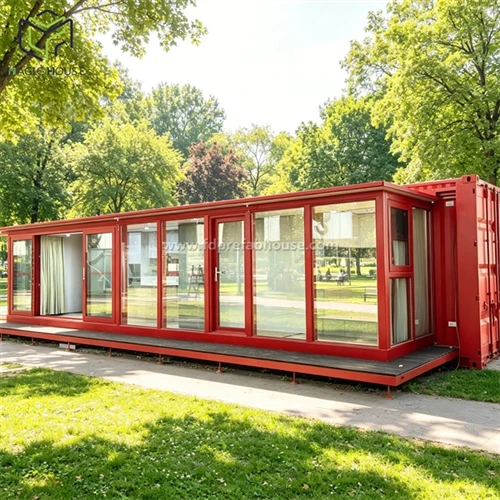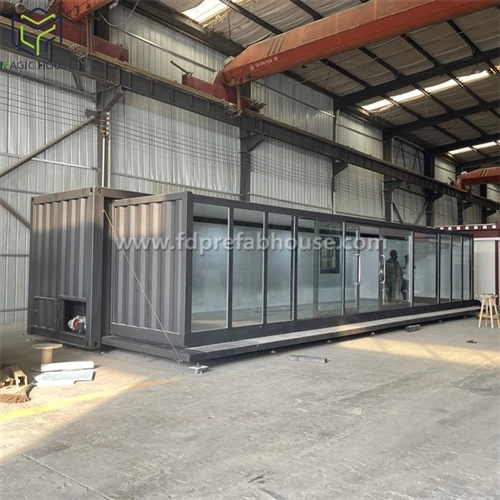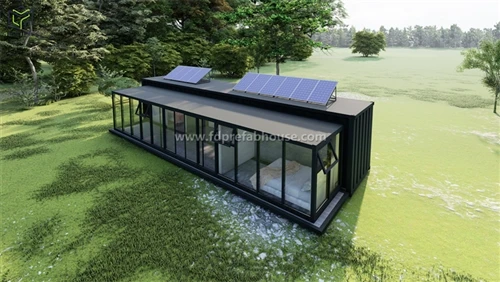
As custom-built container cafés become increasingly popular, the question of "how effective is the thermal insulation?" has emerged as a primary concern for clients before placing an order. The inherent metal structure of a container café means it naturally conducts heat rapidly; choosing the right insulation material ensures the interior remains warm in winter and cool in summer while keeping energy consumption under control. Conversely, making the wrong choice can lead to a situation where air conditioning struggles to cope in the summer, and guests find it too uncomfortable to linger in the winter. So, how should one choose between the two most prevalent insulation materials on the market today: rock wool boards and polyurethane (PU) foam boards? This article provides a comprehensive analysis across three key dimensions: material properties, application scenarios, and cost investment.
I. Why Is Professional Thermal Insulation Essential for Container Cafés?
The original design objective of shipping containers was to protect cargo from the elements during sea voyages-not to maintain a constant internal temperature. Their exterior consists of weather-resistant steel plates, typically 1.5 to 2.0 millimeters thick. With a thermal conductivity coefficient of approximately 50 W/(m·K), these steel plates offer virtually no resistance to heat transfer. Under the scorching sun of summer, the container's exterior surface temperature can exceed 60°C, turning the interior into a sauna; conversely, when cold waves strike in winter, the interior becomes akin to a walk-in freezer.
Consequently, a basic container structure lacking professional insulation treatment struggles to maintain a stable indoor temperature during extreme summer heat or winter cold. This leads to a drastic surge in air conditioning load, directly compromising guest comfort and driving up electricity costs-a critical pain point for container café entrepreneurs worldwide (second only to the initial price). However, a professionally designed insulation layer can elevate the thermal performance of a container-based structure to match-or even surpass-that of traditional brick-and-mortar buildings.
II. Rock Wool vs. Polyurethane: A Comprehensive Comparison of the Two Leading Insulation Materials
If we were to liken insulation materials to clothing, rock wool boards would be akin to a heavy, fire-resistant blanket, while polyurethane foam would resemble a lightweight down jacket. Although both appear to share the same objective-providing thermal protection-the specific scenarios for which they are best suited differ significantly.
1. Thermal Conductivity (The Core Metric for Insulation Performance)
The lower a material's thermal conductivity coefficient, the more effective its thermal insulation performance. In terms of thermal insulation efficiency, polyurethane foam significantly outperforms rock wool. The former features a loose, closed-cell structure filled with inert gas, resulting in extremely slow heat conduction; the latter is an inorganic fibrous material where the air layers between fibers provide basic thermal insulation capabilities, though it is less dense than polyurethane.
Polyurethane Foam: With a thermal conductivity coefficient of only 0.018–0.024 W/(m·K), it stands as one of the most effective choices among currently available thermal insulation materials. To achieve the same level of thermal insulation, polyurethane requires a thickness of only approximately 60% of that required by rock wool. For instance, based on calculations derived from building insulation standards, achieving thermal performance equivalent to a standard 240mm masonry wall requires approximately 24mm of rock wool, whereas polyurethane requires only about 14mm.
Rock Wool Board: Its thermal conductivity coefficient ranges from 0.036 to 0.044 W/(m·K)-approximately double that of polyurethane. Empirical data indicates that in a container-based guesthouse located within a scenic area, the installation of 100mm-thick rock wool boards resulted in an 8°C increase in indoor temperature during winter compared to uninsulated conditions, and a cooling effect of up to 6°C during summer.
In terms of thermal conductivity, polyurethane is clearly the superior option.
2. Fire Resistance (The Safety Baseline)
Rock Wool Board: Class A Non-combustible. Rock wool is manufactured from natural minerals-such as basalt-that are melted at high temperatures and drawn into fibers; it is, in essence, stone. Consequently, it does not burn when exposed to fire, nor does it emit toxic fumes. Rock wool complies with the national Class A standard for the "Classification of Combustion Performance of Building Materials and Products." With a fire resistance rating exceeding three hours, it can be utilized in the walls, roofs, and fire partitions of container-based cafes to satisfy even the most stringent fire safety regulations.
Polyurethane: Class B1 Flame-retardant or Class B2 Combustible. Standard polyurethane is a highly combustible material (Class B2); while the addition of flame retardants can elevate it to Class B1 status-meaning it is "self-extinguishing once removed from the fire source"-a critical risk remains. If a "chimney effect" develops within the narrow, enclosed cavities of a wall structure, it can draw in large quantities of external oxygen, rendering the fire extremely difficult to control. More critically, the combustion of polyurethane generates highly toxic cyanide gas, posing an extremely high risk to occupants attempting to escape. Key Conclusion: In any scenario involving government regulatory inspections, high commercial foot traffic, or stringent fire safety requirements, rock wool is virtually the only material that can guarantee regulatory approval and operational safety. Polyurethane is suitable only for spaces where fire safety approval is explicitly not required, and where the property owner is willing to assume the associated risks.
Safety is a paramount consideration in commercial settings. As a "dwell-time" commercial space-where owners and customers typically spend extended periods-a container café faces significant risks in the event of a fire. Rock wool's Class A non-combustible rating ensures that, at the very least, the café structure itself will not act as a source for spreading the flames, thereby buying precious time for safe evacuation.
3. Moisture Resistance and Application Limitations
Rock Wool: Susceptible to Water. The fibrous structure of rock wool readily absorbs water and moisture; once saturated, its thermal insulation performance deteriorates sharply, and it is extremely difficult for it to dry out naturally. For instance, after three years of operation, a container café located within a scenic tourist area discovered that some of its rock wool panels had become moisture-laden and had begun to sag; only after replacing these panels did the indoor temperature fluctuations noticeably subside. Consequently, when utilizing rock wool in regions characterized by heavy rainfall or high humidity-or in container cafés situated near the coast-it is imperative to implement rigorous waterproofing and moisture-proofing measures concurrently, such as installing a dedicated vapor barrier or a PE sealing layer.
Polyurethane: Virtually Non-Absorbent. Polyurethane foam boasts a closed-cell ratio exceeding 90%, resulting in an extremely low water absorption rate. It retains its excellent thermal insulation properties even when subjected to humid environments or prolonged outdoor exposure.
For coastal container cafés, or in scenarios where the structure is continuously exposed to outdoor rainfall, polyurethane holds a distinct advantage in terms of moisture resistance.
4. Construction Methods and Process Complexity
Rock Wool Panels: Primarily Pre-fabricated and Installed; Precision is Controllable. Rock wool sandwich panels are pre-fabricated and molded in a factory setting. During the container manufacturing process, these rock wool insulation panels are pre-installed directly at the factory-integrated with color-coated steel or galvanized steel facing panels-to achieve a harmonious balance between structural rigidity and thermal insulation performance. By integrating wall panel installation and insulation layer flatness inspections directly into the production line, manufacturers can exercise rigorous, end-to-end quality control throughout the entire daytime manufacturing cycle.
Polyurethane: Flexible Application Process. Polyurethane can be applied directly to the interior walls of the container using a spray application technique. This method effectively fills the contours and crevices of the corrugated metal panels, creating a seamless, fully enclosed barrier that prevents thermal loss caused by air convection. Spray application is a convenient method for incorporating thermal insulation during the renovation of concrete structures. For prefabricated shipping containers-which are manufactured to standard dimensions-the application of sprayed polyurethane offers a relatively low-cost and highly efficient insulation solution.
5. Other Performance Differences
Sound Absorption and Insulation: The fibrous structure of rock wool possesses inherent sound-absorbing and noise-reduction capabilities. It effectively minimizes the intrusion of external noise and reduces internal echoes, making it particularly suitable for commercial spaces-such as cafes-where acoustic quality is a priority. Polyurethane offers no significant advantages in this regard.
Environmental Friendliness: Rock wool is an inorganic mineral material with a long service life and excellent environmental credentials. Polyurethane, conversely, is a synthetic petrochemical material; consequently, its environmental performance metrics are inferior to those of rock wool.
Service Life: Rock wool exhibits strong resistance to corrosion and aging, boasting a service life of over 20 years. Polyurethane, however, is susceptible to degradation when exposed to ultraviolet (UV) radiation in outdoor environments; therefore, it requires an external protective layer-such as aluminum cladding-to ensure its longevity.
6. Cost Comparison
For a standard 20-square-meter container-based cafe, adopting a composite insulation scheme featuring sprayed polyurethane combined with a reflective membrane entails an initial insulation investment of approximately 20,000 to 30,000 RMB. However, this investment can result in energy savings of over 50% on air conditioning costs.
While the upfront cost of rock wool panels is slightly higher than that of polyurethane, the insulation investment is a one-time, comprehensive expenditure. Over the long term, the operational and energy-related expenses associated with rock wool are comparable to-or potentially lower than-those of polyurethane.
Regarding specific cost estimates, it is recommended that export sales representatives provide recommendations tailored to the actual project location's climatic conditions, the client's budget, and the intended operational use. For instance, a cafe might adopt an insulation design featuring a "double-layer container shell with an intermediate air gap." This composite design effectively blocks street noise while maintaining stable indoor temperatures, thereby enhancing the overall efficiency of both summer cooling and winter heating systems.
III. So, Which Option Should You Choose? The selection strategies for various scenarios are quite clear:
**Scenario Type** | **Recommended Insulation Material** | **Rationale**
**Urban Cafés in High-Traffic Areas (Strict Fire Safety Regulations)** | Rock Wool Board (Preferred) + Polyurethane-Sealed Composite | Class A fire rating ensures regulatory compliance; the dual-layer composite leverages the strengths of both materials while mitigating their weaknesses.
**Cafés in Coastal / Rainy & Humid Regions** | Polyurethane Foam Board or XPS Extruded Polystyrene Board | Closed-cell structure provides superior waterproofing and moisture resistance, ensuring long-term stability and weather resistance in outdoor environments.
**Regions with Extreme Climates (Cold or Hot)** | Dual-Layer Insulation: Outer Rock Wool + Inner Spray Polyurethane | Rock wool provides fire resistance, while polyurethane offers exceptional thermal insulation; this combination delivers optimal overall performance.
**Café Kiosks Prioritizing Lightweight Design, Rapid Assembly, and Limited Budgets** | Spray-Applied Polyurethane Honeycomb Sandwich Panels | Lightweight construction, rapid installation, and low overall material costs.
**Eco-Conscious / High-Aesthetic Commercial Outlets (e.g., in Cultural & Tourism Zones)** | Rock Wool Sandwich Panels (Paired with exterior finishes such as fluorocarbon coatings or single-sided baked paint) | Aesthetically pleasing, fire-safe, and fully compliant with regulations; also offers effective noise reduction capabilities.
**General Recommendation:** When the primary goal is maximizing spatial efficiency-and there are no rigid fire safety mandates-polyurethane is the superior choice (as the value gained from fitting in just one extra table and chair set can be significant). However, for any project where minimizing commercial risk is the top priority, one should invariably opt for rock wool or a rock-wool-based composite insulation solution.
**IV. The Advantages of Factory Pre-fabrication: Why You Don't Need to Worry About On-Site Construction Quality**
It is worth noting that the "Waimaokuaijie" (Foreign Trade Express) series of container cafés-available in standard 20ft x 8ft dimensions or custom sizes-undergo their entire insulation process during factory pre-fabrication. Specifically, the container's structural enclosure is seamlessly integrated and formed directly on the manufacturing assembly line. Data indicates that, within the controlled factory environment, the filling and bonding of all insulation layers are completed in full. This significantly reduces the risk of "cutting corners" or shoddy workmanship at the construction site, as well as the potential for quality degradation caused by adverse weather or humidity. With over 90% of the construction work completed at the factory, the on-site process requires only basic site preparation and crane hoisting before the café is ready for operation; the entire setup cycle can typically be completed within 7 to 10 days. For overseas export clients, this industrialized production model also guarantees consistent quality across subsequent batch orders, ensuring that the final product remains unaffected by potential fluctuations in the skill levels of on-site construction workers.