Australia's public pools are facing a structural crisis. Royal Life Saving Australia estimates that without an investment of up to A$8 billion for refurbishment and upgrades, approximately 500 public pools could face closure over the next decade. With the average Australian public pool built in 1968 and a typical lifespan of 50 years, around 500 pools are set to reach the end of their service life by approximately 2030. Meanwhile, six million Australians-24% of the total population-live more than a 10-minute drive from a public pool, a figure projected to rise to 7.3 million by 2032.
Traditional public pool construction models have struggled with cost control. A review of 26 pool projects revealed a median cost increase of 67.1% between announcement and delivery, with half of the projects requiring significant scope reductions. The case of Maryborough, Victoria, is illustrative: the cost of rebuilding the town's pool surged from A$9 million to A$14 million-an increase of over 50%-leaving the town without an outdoor pool for a third consecutive summer. Liz Taylor, a lecturer in urban planning at Monash University, notes that Australia's vast network of aging outdoor pools represents a "cost liability" that many local councils cannot afford to manage.
Against this backdrop, modular and prefabricated pool solutions are moving from niche concepts to mainstream industry discussion. In November 2025, Royal Life Saving (NSW, ACT, and Tasmania) released a document titled *The Future of Pools*, explicitly advocating for modular, scalable, and sustainable aquatic facility designs. Inspired by the New South Wales government's "pattern book" approach to housing design, the document seeks to apply the same logic to pool infrastructure: utilizing standardized, prefabricated components to achieve rapid deployment, flexible configuration, and cost control. At the launch of the document, Alastair Richardson, a director at Cox Architecture, provided specific cost benchmarks: a 50-meter outdoor modular pool can be delivered in approximately eight months at a cost of around AUD 5.5 million. Local councils can select specifications based on their needs-such as pool length (50m or 25m), number of lanes (5 to 8), depth (suitable for teaching, competition, or leisure), and ancillary facilities (cafés, gyms, offices, etc.). The modular approach also enables councils to add functional modules in stages, depending on their budgets.
Richardson drew a parallel between the logic of modular pools and modular housing: "Modular construction allows for batch production, thereby reducing costs. It enables us to create solutions that can be transported nationwide, eliminating reliance on local tradespeople." He noted that modular housing has already achieved cost savings of 10% to 30%, with further savings expected as the process matures.
For the pool industry, this trend is reshaping perceptions of the "pool" as a product within the public procurement sector. The shift from fixed civil engineering projects to relocatable, scalable prefabricated products requires suppliers to develop core competencies distinct from those of traditional pool contractors: standardized design, factory-based manufacturing, logistics coordination, and rapid on-site installation. Waterco has announced partnerships with Royal Life Saving NSW and Cox Architecture to supply modular water treatment solutions for these systems, prioritizing energy and water efficiency as well as climate resilience. Myrtha Pools' prefabricated stainless-steel modular panel system has also been utilized in projects such as the Parramatta Aquatic Centre, which won the 2025 IOC IAKS Architecture Award.
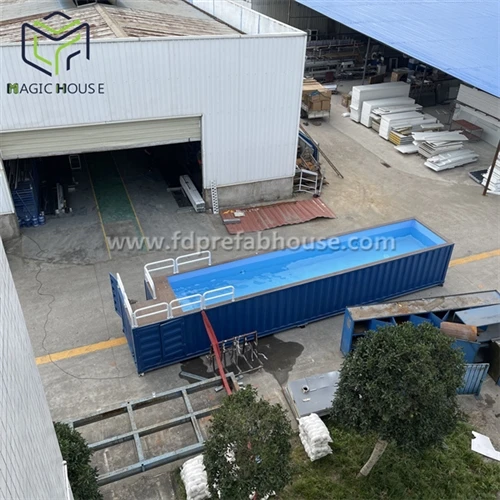
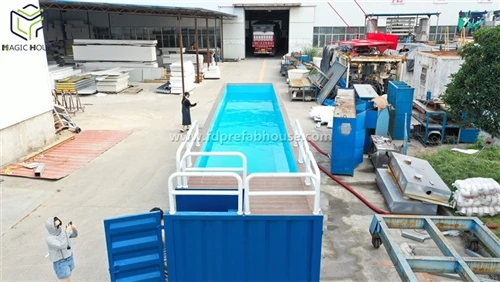
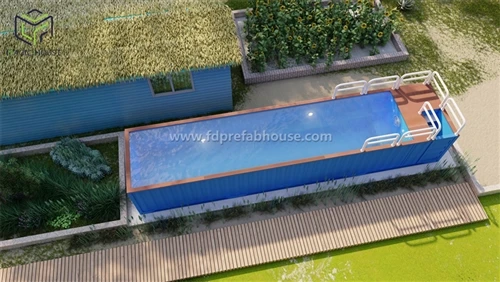
From a broader perspective, the rise of modular pools aligns with the overall growth of Australia's modular construction industry. The sector is expanding at an annual rate of 8.3% and currently accounts for approximately 5% of total construction activity; compact modular pool solutions-such as container pools-can be installed in residential and commercial settings in up to 50% less time than traditional in-ground pools. For suppliers of pool products targeting the Australian market, the ability to offer products based on modular logic-featuring standardized interfaces, factory prefabrication, rapid deployment, and scalable configurations-will increasingly become a key differentiator of competitiveness.