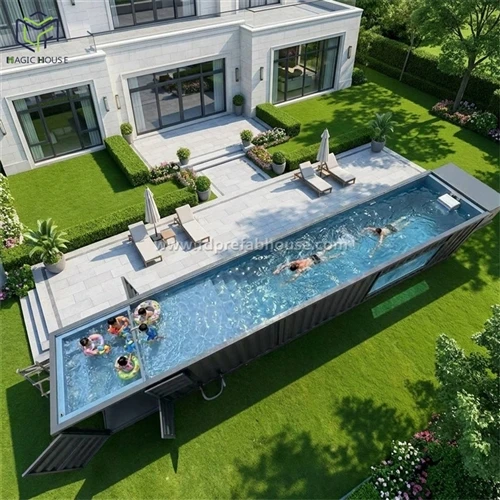
Container swimming pools have different corrosion challenges compared with standard container buildings because the steel structure is exposed to continuous moisture. In addition to water exposure, chemicals used for pool maintenance, such as disinfectants and salts, may accelerate corrosion if protection is insufficient.
During manufacturing, key areas requiring attention include the steel frame, welding sections, waterproofing connection areas, and drainage points. Since the pool structure needs to withstand long-term water pressure, the protective layer on the steel surface must remain intact to prevent moisture from reaching the steel structure.
After steel fabrication, surface preparation is required to remove rust, oxidation, and processing residues before applying corrosion protection. Welding areas require additional inspection and treatment because high temperatures during welding can affect the original protective layer.
For container swimming pools exported to Australia, New Zealand, the United States, and Canada, environmental conditions must also be considered. Coastal regions require attention to salt spray corrosion; high-temperature areas require consideration of UV exposure on external coatings; and colder regions require protection against freezing temperatures, ice formation, and material expansion or contraction.
Besides steel protection, the waterproofing system inside the pool is equally important. Manufacturing processes typically include water leakage tests to check sealing performance, weld quality, and drainage functions, helping reduce potential issues during long-term use.
Corrosion protection for container swimming pools requires a complete approach that combines steel treatment, waterproofing systems, and environmental adaptation rather than relying on a single protective material.