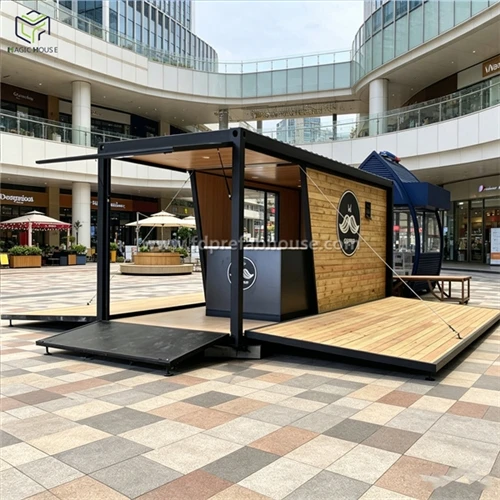
New Zealand's construction industry is paying increasing attention to modular and off-site construction, particularly for projects in remote areas and commercial environments. Rising construction costs, labour constraints, weather-related delays and the practical difficulties of transporting workers and materials to distant sites are encouraging project owners to consider alternatives to fully on-site construction. BRANZ notes that off-site manufacturing can offer advantages in construction speed, weather protection, quality assurance and waste management, although the actual benefits depend on the manufacturing process and project conditions.
Why Remote Projects Can Benefit from Modular Construction
Remote construction sites often involve additional logistical challenges. Limited road access, long transportation distances and a shortage of skilled workers can make conventional construction more difficult to coordinate. In these situations, completing a large proportion of the building in a factory can reduce the amount of work that needs to be carried out on site.
For example, wall systems, electrical installations, plumbing and interior finishes can be completed before the modules leave the factory. Once foundations and site services are ready, the modules can be transported to the project location and installed relatively quickly.
However, transportation needs to be considered from the beginning of the design process. New Zealand's Ministry of Business, Innovation and Employment points out that road access, bridges, narrow roads and site conditions can affect the size and type of modules that can be transported. In some locations, smaller modules or panelised systems may be more practical than large volumetric units.
Why Commercial Projects Are Looking at Modular Buildings
Commercial projects often have a strong need to control construction schedules. Offices, worker accommodation, education facilities, holiday parks, healthcare buildings and other commercial spaces may need to become operational within a defined period.
One advantage of modular construction is that factory production and site preparation can take place at the same time. While foundations and utilities are being prepared, building modules can be manufactured indoors. This parallel workflow can reduce the amount of construction activity required after the modules arrive on site.
New Zealand businesses are also considering modular construction because of current pressures around labour availability, construction costs and project predictability. Recent industry discussions identify faster delivery, cost control, reduced weather exposure and more consistent factory-based quality as important reasons for considering modular solutions.
Weather and Quality Control
New Zealand's variable weather conditions can affect conventional construction schedules, especially when major parts of the building are completed outdoors. Factory production provides a more controlled working environment, allowing construction activities to continue without being directly exposed to rain or other weather disruptions.
Off-site construction can also make quality control more systematic because materials, tools and production procedures are concentrated in one location. BRANZ has noted that buildings constructed under controlled conditions can achieve greater precision and improved protection from weather during construction.
Modular Does Not Mean Suitable for Every Project
Despite these advantages, modular construction is not automatically the best solution for every New Zealand project. Site accessibility, transportation regulations, crane requirements, foundation design, local building requirements and connection details all need to be considered before production begins.
Research into modular off-site construction in New Zealand has also identified challenges such as limited industry skills, high initial investment, supply-chain integration and perceptions of prefabricated buildings.
For this reason, successful modular projects usually involve early coordination between the designer, manufacturer, transport provider, site contractor and relevant authorities.
Looking Ahead
The growing interest in modular buildings in New Zealand reflects a broader change in how construction projects are being planned. Instead of carrying out every stage at the project site, more work can be transferred to controlled manufacturing environments and then completed through transportation and on-site installation.
For remote locations, this approach can help reduce the amount of labour and construction activity required on difficult sites. For commercial projects, it can provide a way to coordinate factory production with site preparation and potentially shorten the period before a building becomes operational.
As New Zealand continues to face challenges related to construction costs, labour availability and project delivery, modular construction is likely to remain an option worth evaluating for projects where transportation, site conditions and construction time are important considerations.