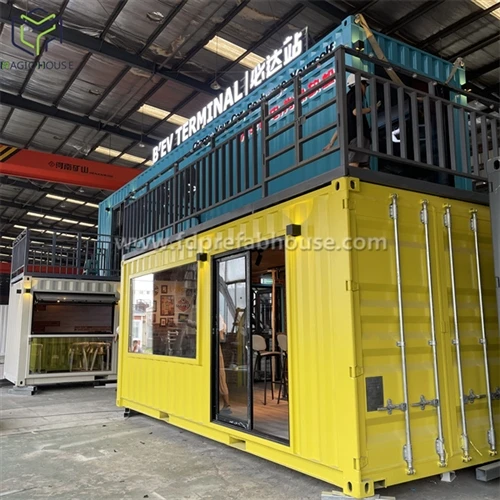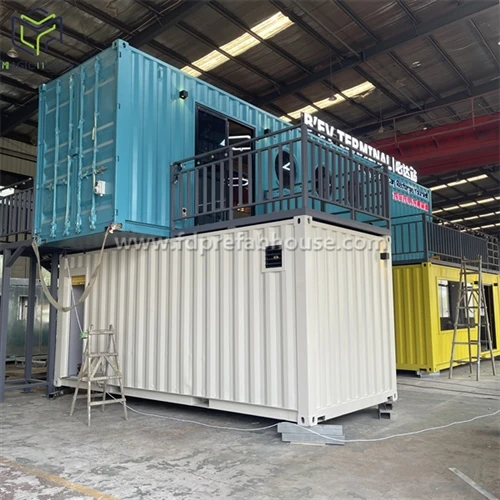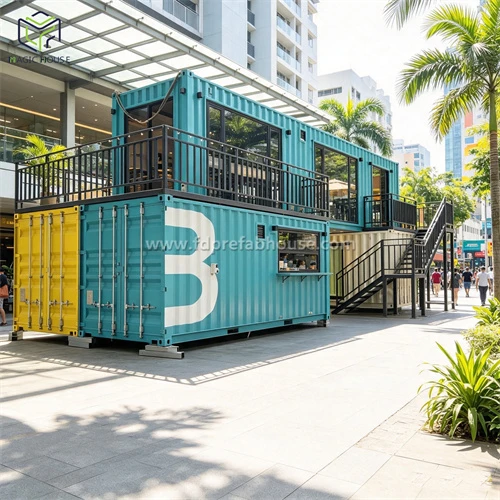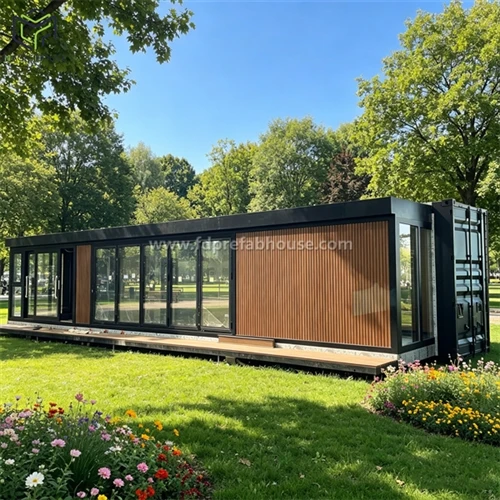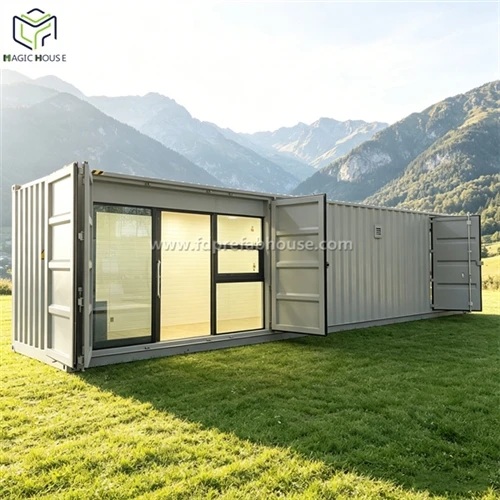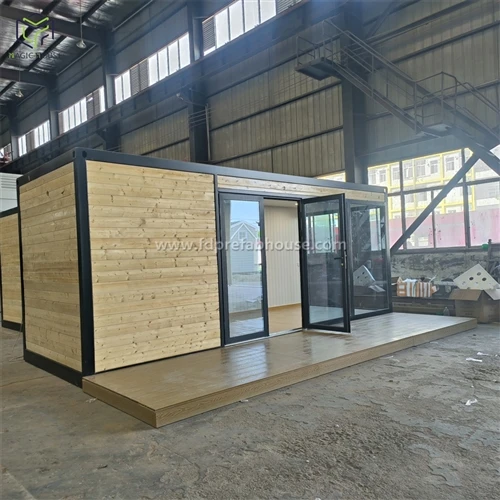
Container buildings, with their advantages of modularity, mobility, and rapid construction, are widely used worldwide in residential, commercial, and public facilities. The steel structure is the fundamental guarantee of load‑bearing capacity and safety for a container house, serving as the building's "skeletal system". This article, referencing the national industry standard Technical Specification for Container Modular Composite Buildings (CECS 334:2013) and the Standard for Design of Steel Structures (GB 50017-2017), provides a comprehensive technical analysis of steel structures, covering steel grade selection, frame construction, welding processes, anti‑corrosion treatment, and seismic/wind resistance design.
1. Steel Grade Selection: The Dominant Role of Q235B and Q355B
The main structure of container houses generally uses carbon structural steel, with Q235B and Q355B being the most widely applied grades.
Q235B: Yield strength ≥235 MPa, suitable for general industrial and civil buildings under normal load conditions.
Q355B: Yield strength ≥355 MPa (tensile strength ≥470 MPa), suitable for high‑load or long‑span structures.
Additionally, the appropriate grade should be selected according to the environment: for low‑temperature environments, Q355D/E grade steel is recommended; in coastal high‑humidity or corrosive environments, galvanised steel or heavy‑duty anti‑corrosion treatment is required; in alpine regions, weathering steel Q460NH can be used to further enhance deformation resistance.
2. Frame Construction and Connection Techniques
The box frame consists of corner posts, top beams, bottom beams, load‑bearing columns and other key components, forming an integrated rigid structure through fully automatic welding and bolting processes.
Welding process: The standard practice is CO₂ gas‑shielded welding; critical nodes (four corners, door frames) use double‑sided full‑penetration welding with a weld height of no less than 4 mm.
Bolted connections: Bolts must be reliably tightened; high‑strength bolts should be grade 8.8 or above, and the torque for M20 bolts should be no less than 400 N·m.
3. Full‑Chain Anti‑Corrosion Treatment
The anti‑corrosion treatment for container steel structures generally follows the standardised route of "steel pretreatment → epoxy primer → polyurethane topcoat", with a total film thickness typically controlled above 120 μm.
Primer requirements: The epoxy zinc‑rich primer layer thickness is recommended to be no less than 60 μm, and the total dry film thickness of the coating should be at least 60 μm.
Surface preparation: After welding, critical components require sandblasting to achieve Sa2.5 cleanliness, laying the foundation for firm coating adhesion.
Special environments: In severely corrosive environments, hot‑dip galvanising (zinc layer thickness not less than 80 μm) can be used, effectively extending the service life to more than 25 years.
4. Seismic and Wind Resistance Performance
Container houses are generally designed for a seismic fortification intensity of 8 degrees. The design wind pressure is determined according to local climatic conditions. The box modules are rigidly connected through lateral‑force resisting bracing members and special connectors to ensure overall stability under extreme loads. When stacked in multiple layers, dedicated twist‑lock connectors with a shear strength of no less than 150 kN are used. Boxes with fully welded steel structures or high‑strength bolted connections ensure clear load‑transfer paths and effectively reduce stress concentrations.
5. Applicable Technical Standards
In the steel structure design phase, the Standard for Design of Steel Structures (GB 50017-2017) must be strictly followed, adhering to the core design principles of "safety, applicability, economic rationality, and advanced technology". The design and acceptance of the box steel structure must also comply with the relevant provisions of the industry standard Technical Specification for Container Modular Composite Buildings (CECS 334:2013).
Chengdu Fangda Magic House's Steel Structure Practice
Chengdu Fangda Magic House has been deep cultivation the modular container building industry for many years. In terms of steel structure, the company strictly follows national standards in material selection, welding quality inspection, and anti‑corrosion coating. With an independent factory of more than 20,000 square metres and over 70 patents, its products are exported to more than 30 countries, accumulating extensive engineering experience in extreme environments such as high salt spray, severe cold, and high humidity.