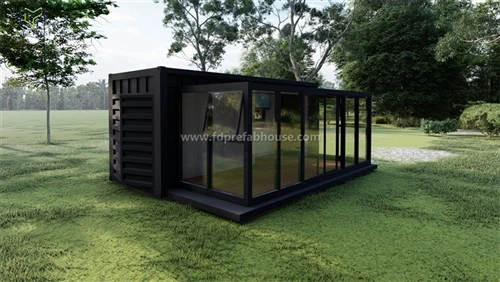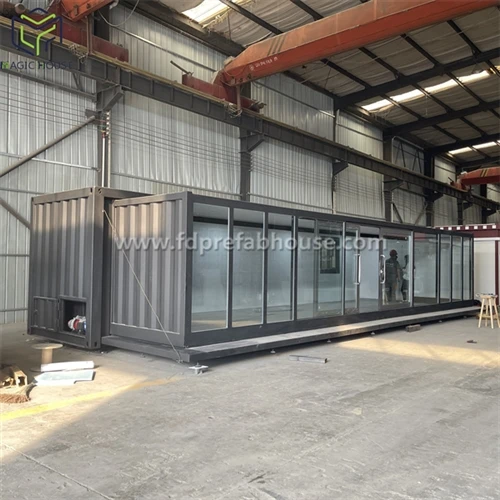
Beyond the growing demand at the commercial level, new developments in policy have also created favorable conditions for the export of containerized toilets to Australia.
In 2025, the Legislative Council of New South Wales, Australia, adopted a landmark inquiry report on public toilets. This report put forward 22 recommendations for reform-covering the planning, design, funding, and maintenance of public toilets-and highlighted that deficiencies in toilet facilities constitute not merely a sanitation issue, but fundamentally a matter of public health and human rights. The legislative framework now mandates the implementation of universal design standards and requires that individual toilet cubicles be fully equipped with essential amenities. Furthermore, the government has exerted clear pressure on local councils to ensure that new developments are equipped with mobile toilet facilities more efficiently and to a higher standard.
Concurrently, within the realm of occupational safety, SafeWork NSW-acting under the *Work Health and Safety Regulation 2025* (as most recently amended)-strictly stipulates that Persons Conducting a Business or Undertaking (PCBUs) bear a legal obligation to provide toilet facilities that are clean, safe, and suitable for use. Consequently, the provision of high-quality containerized toilets at large-scale gatherings, construction sites, and mining operations is rapidly transitioning from an "optional extra" to a "mandatory requirement."
Moreover, the *AS/NZS 3500.2* joint Australian and New Zealand standard-updated in 2025-introduces entirely new, detailed requirements regarding drainage systems and the installation of waterless urinals. Published in April 2025, this standard mandates that all new construction projects commenced on or after October 20, 2025, must adhere to the new edition. Notably, the updated standard specifically expands the permissible scope of materials-including polypropylene (PP) piping-thereby affording Chinese manufacturers greater operational flexibility in terms of material substitution and cost control while maintaining full regulatory compliance.