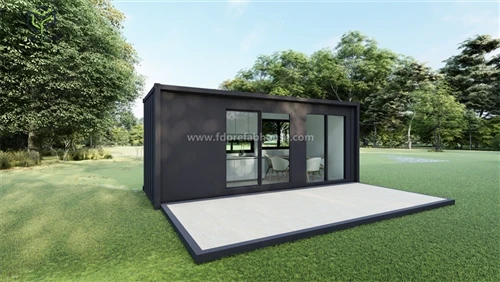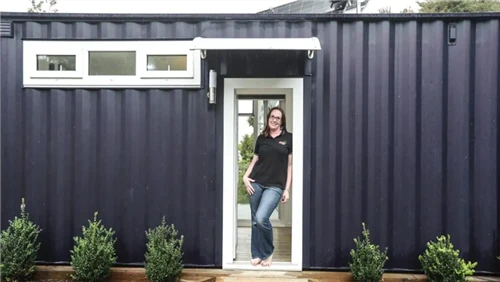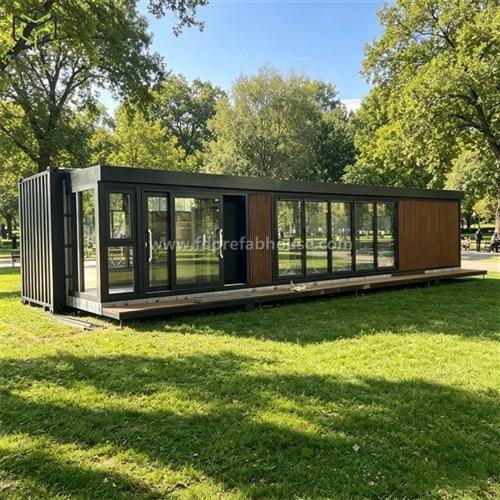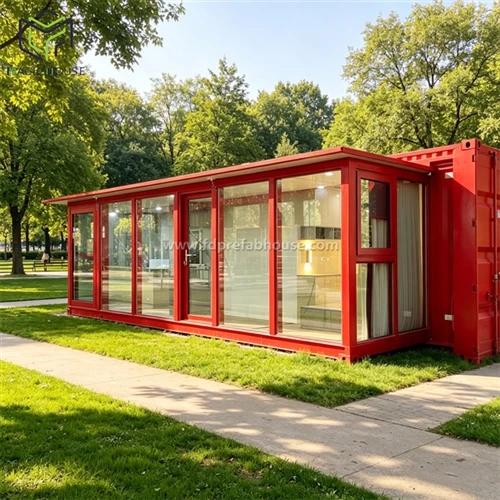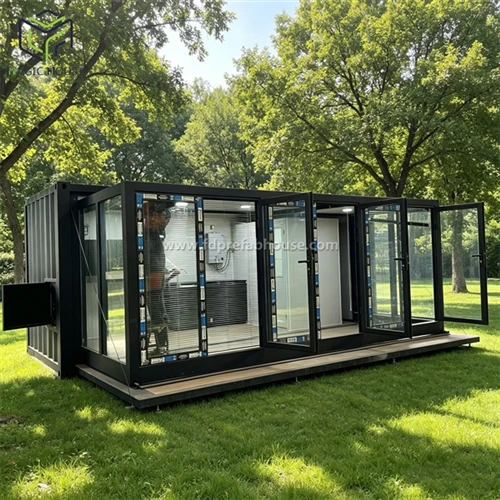
A home in Titirangi, Auckland, converted from two used shipping containers, has recently sold for nearly NZ$700,000. This compact dwelling-measuring just 45 square meters-garnered significant attention as the first home in New Zealand to achieve an "8 Homestar" rating. Awarded by the New Zealand Green Building Council, this certification measures a home's overall sustainability performance across areas such as energy use, water efficiency, and the environmental impact of materials.
Built in 2017, the home originally served as a show home for IQ Container Homes, a company founded by the owner and designer, Brenda Kelly. The structure consists of one 40-foot and one 20-foot container arranged in an interlocking L-shape, anchored by deep-pile foundations. The main container houses the living area, kitchen, bedroom, and bathroom, while the smaller container was converted into an office and guest room. A timber deck extending approximately 30 square meters at the rear offers views of the surrounding bushland.
In terms of sustainable design, the house features a 2kW rooftop solar array, uPVC double-glazed windows and doors, and enhanced insulation. Rainwater is harvested for laundry and toilet flushing-reducing water consumption by nearly half-while wastewater is treated via an eco-friendly "worm filtration" system. The interior finishes utilize low-VOC paints and adhesives, and the timber flooring is fully recyclable. The home previously rented for NZ$510 per week and complies with New Zealand's "Healthy Homes" standards.
The buyer is a young first-home owner utilizing KiwiSaver funds. Kelly noted that the buyer appreciated the home's ecological value and unique character.
However, following the sale, Kelly announced plans to wind down IQ Container Homes, a business she has operated for twelve years. She cited increasingly stringent local council approval requirements-along with longer processing times and higher costs-as factors making such non-traditional housing projects increasingly difficult to execute. Nevertheless, she maintains that the concept of container housing remains valuable, particularly for buyers facing land or budget constraints.