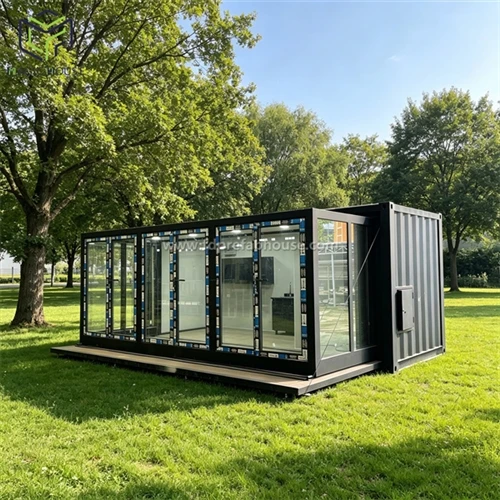
UK Container Pools: Four Sets of Regulations Apply Simultaneously-From Structure to Electrics
When installing a container pool in the UK, the most commonly underestimated factor is not the product itself, but the extent of the compliance requirements. Installing a 40-foot container pool typically triggers compliance obligations across four dimensions of the Building Regulations: structure, electrics, drainage, and moisture penetration.
Scope of Building Regulations
Container pool projects in the UK must comply with the *Building Regulations 2010*, specifically: Part A (Structure), Part G (Sanitation and Water Efficiency), Part P (Electrical Safety), and-depending on the enclosure-Part F (Ventilation). This means that structural calculations, waterproofing system specifications, and technical documentation for electrical equipment must be provided at the factory stage, rather than being sorted out on-site.
Planning Permission and Permitted Development
Class E of the *Town and Country Planning (General Permitted Development) Order 2015* (England) stipulates that swimming pool buildings or enclosures ancillary to a dwelling may benefit from "permitted development" rights, provided certain conditions are met. These conditions include: the structure must not be located in front of the house, and the container structure must be at least 20 meters away from any boundary. If the pool is used for short-term rentals (e.g., Airbnb), one must also verify whether the local planning authority classifies it as a commercial use, which could trigger additional planning approval requirements.
Specifics of UK Ground Conditions
The heavy clay prevalent in southeast England, the soft fill soil found on urban plots, and the high water tables in western and low-lying regions all impose distinct requirements on foundation design. While container corner castings are designed to handle transport loads, cutting the container body-whether for the pool opening, equipment penetrations, or viewing windows-alters the original load paths. Foundation design must be finalized prior to factory prefabrication, rather than being adjusted on-site based on conditions.
Condensation: A Hidden Risk
The UK climate causes continuous corrosion to exposed steel structures, yet the issue of condensation is frequently overlooked. External coatings, internal linings, pipe insulation, and equipment compartment ventilation must all be incorporated into the plan during the design phase; otherwise, corrosion may begin in unseen areas.