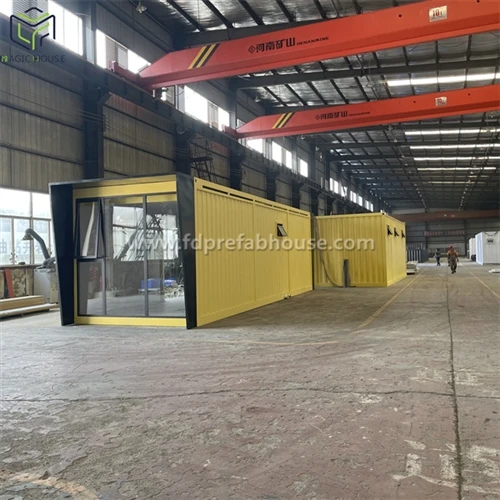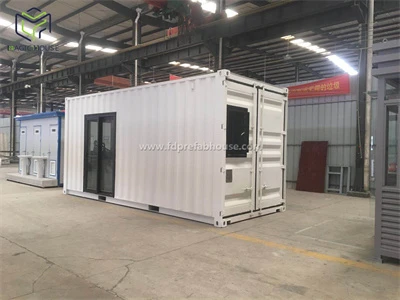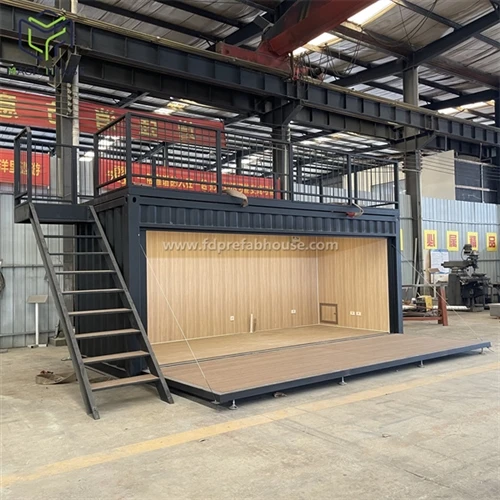
The US regulatory system for commercial buildings (including modified container cafés) is complex and strict, with possible extra requirements at state or county levels. Ignoring certifications can lead to customs holds, failure to obtain a building permit, or even legal disputes. Below are five essential certification categories.
① Electrical Safety (Strictest)
All wires, switches, receptacles, junction boxes, and breakers must carry UL certification.
Distribution panels must comply with UL 67; internal components with UL 508A
It is advisable to have the entire electrical system pass UL 962 (mobile/modular buildings) or UL 12408 (container buildings) field evaluation
② Fire Safety
Interior wall panels, ceilings, and floor materials must be tested according to ASTM E84 (tunnel test):
Flame spread index (FSI) ≤ 25
Smoke developed index (SDI) ≤ 450
For California, also need ASTM E1354 (cone calorimeter) or TB 133 (large‑scale burning test)
Insulation materials (e.g., PU foam) should contain flame retardants and meet UL 94 V‑0 or ASTM E136 (non‑combustibility)
③ Structural Safety (Wind & Seismic)
Based on IBC 2021 or local amendments; wind loads per ASCE 7‑22, seismic per ASCE 7 seismic zones
Modified containers require structural calculations and welding procedure specification (WPS), stamped by a US licensed Professional Engineer (PE)
Live loads for stairs and second‑floor platforms: for commercial use, ≥ 4.8 kN/㎡ (100 psf)
④ Environmental & Health
Wood‑based panels (plywood, MDF, melamine) must comply with CARB Phase 2 or EPA TSCA Title VI (formaldehyde ≤0.05 ppm)
Paints and coatings must meet VOC limits (e.g., California CARB suggests ≤50 g/L)
May also require LEED material documentation (if the project seeks green certification)
⑤ Accessibility (ADA)
If the café is open to the public, entrances, pathways, and restrooms must satisfy the Americans with Disabilities Act (ADA) – e.g., door clear width ≥32 inches, slope ratio ≤1:12, etc.