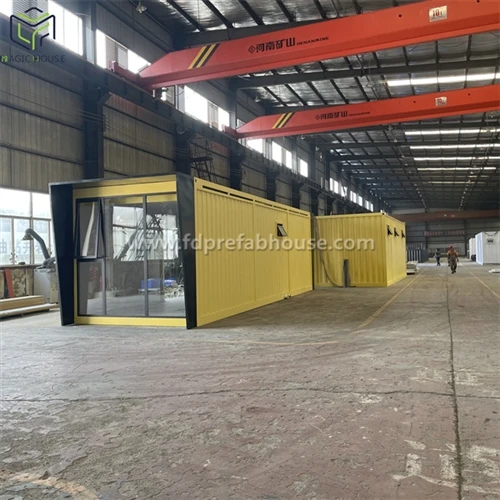
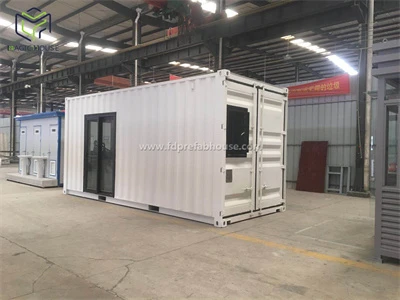
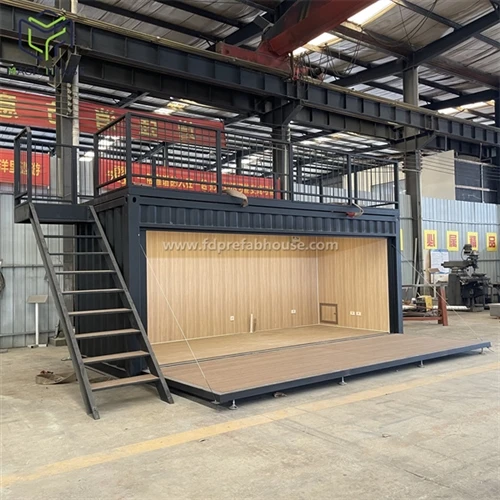
Some manufacturers in the industry use thin-walled steel tubing (with wall thicknesses under 1.5 mm), resulting in deformation, water leakage, or even structural collapse. Relevant technical standards dictate that the steel used for the frame must have a thickness of at least 1.8 mm and a galvanization level of ≥120 g/m², and must meet a seismic resistance rating of Intensity 8. For overseas projects-such as those exporting to the UK-Fangda Mofang enforces professional inspection requirements regarding steel selection and welding processes. During acceptance inspections, purchasers should focus on verifying the steel thickness of the main frame and the quality grade of the welds (butt welds on primary load-bearing components must meet at least Grade II standards, while other welds must meet Grade III standards) and should request the relevant material inspection reports.