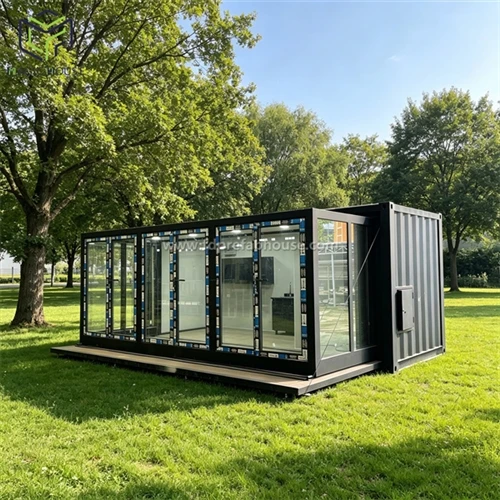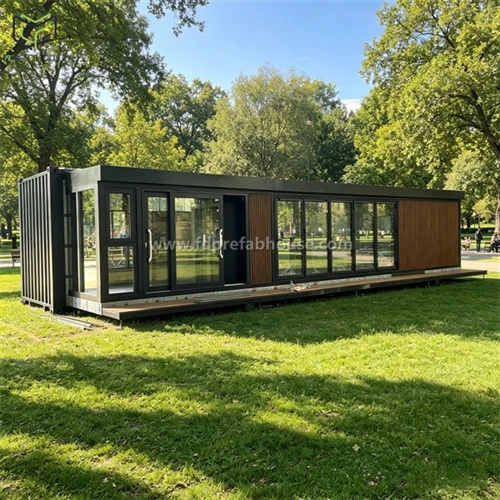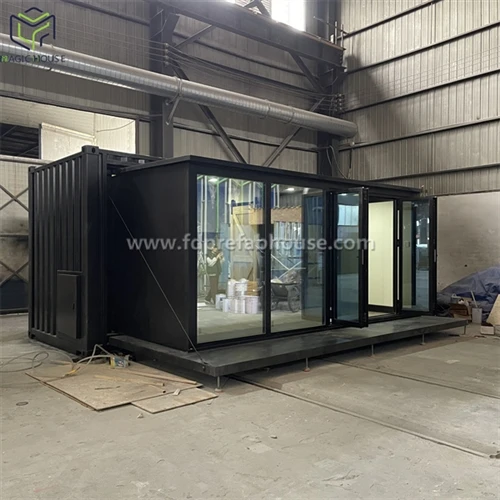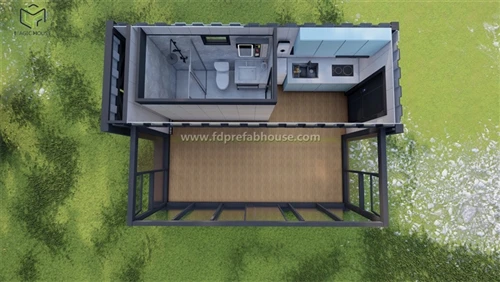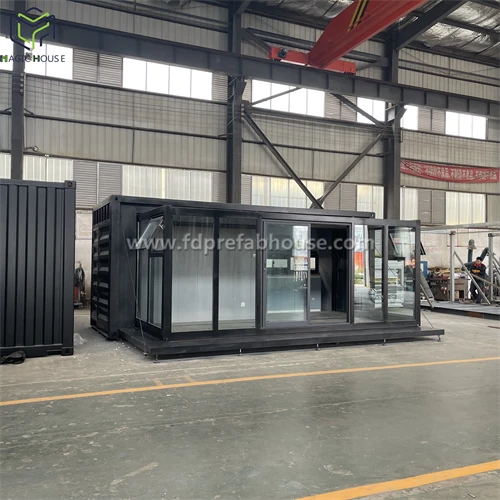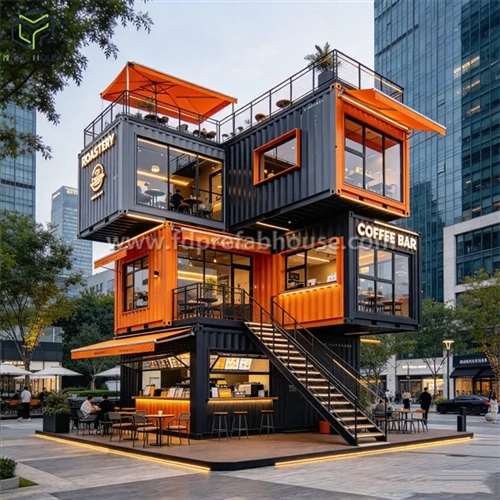
When a prefabricated house priced at AUD 100,000, which can be quickly assembled like Lego bricks, sparks heated discussions in Australia, it underscores the country's severe housing predicament: an annual shortage of 48,000 dwellings, the prolonged 55-week construction period for traditional houses, and a stark gap between these realities and the Albanese government's target of building 1.2 million homes by 2029. The modular housing industry has stepped forward, claiming it can fill this gap, but it calls for policy adjustments from both the government and banks.
Shortage as Opportunity: Fangda Magic House's Positioning Amid Australia's Housing Crisis
Australia's housing crisis essentially stems from an imbalance between "supply speed" and "demand scale", a pain point that modular housing is perfectly poised to address. With 14 years of experience in the mobile space sector, Chengdu Fangda Magic House (Fangda) has built up capabilities that resonate naturally with Australia's market needs. Opportunities for Fangda are clearly emerging across three dimensions: policy, market, and industry.
Policy Relaxation: An Entry Window
The Australian government is shifting from "restriction" to "encouragement", opening up policy channels for modular housing. New South Wales has launched a pilot program for modular social housing, selecting locations like Wollongong to accelerate home delivery, with the state government explicitly stating that "non-traditional approaches are needed to address housing pressure". At the federal level, the government has not only implemented a "5% down payment scheme" for first-time homebuyers to lower entry barriers but also pushed for simplified building codes to pave the way for prefabricated construction technologies.
|
|
|


Market Blue Ocean Amid Supply-Demand Imbalance
Australia's housing market demand is characterized by "diversification + low cost". On one hand, first-time homebuyers, benefiting from the low down payment policy, are driving surging demand for affordable housing around AUD 100,000. On the other hand, there are significant gaps in niche segments such as elderly care housing, temporary mining dormitories, and student apartments – the 19-story modular student apartment project at Macquarie Park in Sydney alone required 565 building modules.
Competitive Advantages from Industrial Upgrading
While Australia's prefabricated construction industry is growing, it remains highly dependent on imports – Chinese prefabricated housing products account for 70% of Australia's prefabricated component imports, far exceeding competitors like Malaysia and Vietnam. This industrial structure provides inherent advantages for Fangda.
Targeted Breakthrough: Fangda's Strategy for Penetrating the Australian Market
Behind these opportunities, challenges such as standard barriers, local competition, and perception gaps in the Australian market cannot be ignored. To seize this boom, Fangda must leverage "compliance as the foundation, localization as the bridge, and scenarios as the core" to convert its export advantages and customization capabilities into tangible market share.
|
|
|


Strengthening Compliance to Address Standard Anxiety
Australia's "full-chain supervision" requirements for construction products represent the first hurdle for foreign enterprises. Fangda needs to establish a "closed-loop Australian standard system" to mitigate risks from the source. On the material front, it should collaborate with NATA-accredited institutions such as SGS Australia to conduct asbestos-free testing and structural strength assessments on all building materials – it is crucial to note that a Chinese enterprise was once blacklisted and had its goods destroyed due to 0.1% asbestos content in panels, a red line that must never be crossed.
Deepening Local Cooperation to Smooth Implementation
The biggest drawback of cross-border enterprises lies in their "local response capability", and cooperation represents the most efficient solution. Fangda can build a "tripartite" local cooperation network: first, collaborate with local Australian builders, drawing on Bibo Build's "Chinese prefabrication + local assembly" model, where local partners handle on-site construction, quality supervision, and after-sales maintenance. This ensures compliance with local construction standards while addressing the issue of slow cross-border service response.
Focusing on Scenario Customization to Build Benchmark Cases
In the Australian market, "visible value" is far more persuasive than "abstract advantages". Fangda should prioritize policy-friendly regions to develop replicable benchmark projects. In modular construction pilot areas in New South Wales, it can collaborate with local governments to launch "affordable social housing" projects, offering solutions for low- and middle-income families with a price tag of AUD 100,000 and a 3-month delivery cycle, replicating the success of Gaorui Intelligent Construction's Tarawan project in Sydney.
|
|
|


Aligning with Financial Policies to Lower Customer Barriers
The Australian government's "5% down payment scheme" provides Fangda with an excellent market entry point. The enterprise can collaborate with Australia's four major banks to launch "product + finance" packages: for first-time homebuyers, it can offer installment payment plans that align with the low down payment policy; for investors, it can design a "rental income guarantee" program, calculating investment return cycles based on the weekly rental rate of AUD 149 for micro-housing in Queensland to reduce decision-making hesitations.
Conclusion: From "Filling the Gap" to "Setting Standards"
While a AUD 100,000 Lego-style house may not single-handedly solve Australia's housing crisis, it signifies that modular construction has become a key force for breaking the deadlock. For Chengdu Fangda Magic House, the Australian market represents not just an opportunity to "sell more houses", but a chance to transform 14 years of technical accumulation into international competitiveness.