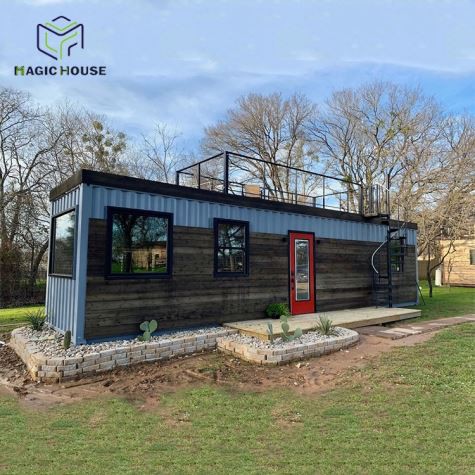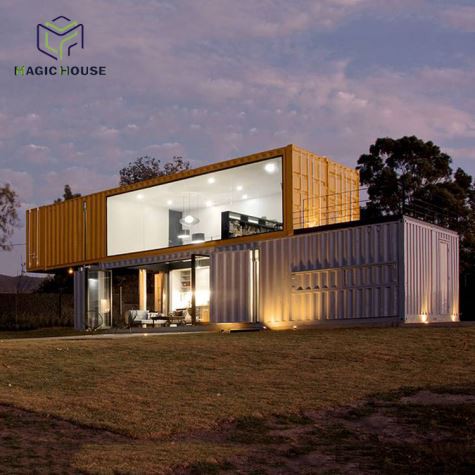

Container prefabricated house construction
New Zealand mobile container house
Container house converted from shipping containers
Container office design
outdoor container office
How do container houses become prefabricated?
Container homes are an innovative and environmentally-friendly approach to home building that has been gaining popularity in recent years. They offer a unique combination of affordability, sustainability, and versatility that traditional homes often lack. One of the key factors in their success is the prefabrication process, which allows these homes to be built quickly and efficiently.
Prefabrication involves constructing the home in a factory or workshop environment off-site, with the fundamental components then being transported to the building site for assembly. This process is often used in the construction of container homes because it drastically reduces the time and resources required for building. By producing the home components in a controlled environment, factories can optimize their resources and ensure high levels of quality control.
During the prefabrication process, the shipping containers used in container homes are modified and outfitted to create specific rooms, floors, and walls, adding fixtures like windows, doors, insulation, and other necessary components as well. They can be altered to create living spaces ranging in size from a small studio to a large, multi-room residence, depending on the individual budget and needs of the homeowner.
Once the home components have been completed in the factory, they are transported to the building site for assembly. The process of joining the sections typically takes only a few days, as the components are designed and built to fit together seamlessly. This means that homeowners can have a fully functional, move-in-ready home in a matter of weeks rather than months.
The prefabrication process also allows for an unparalleled level of flexibility when it comes to design and modification. Homeowners can work with designers and builders to customize their container house to meet their specific needs and preferences, making it a unique reflection of their lifestyle and aesthetic.
In conclusion, container homes owe their speed, affordability, and sustainability to the prefabrication process. By building off-site and optimizing resources, they have made housing more accessible and environmentally-friendly for individuals and families alike. Container homes prove that with a little creativity and innovation, anyone can have the home of their dreams.
How long is the service life of a container house converted from a shipping container?
A container house converted from a shipping container is a highly durable and long-lasting option for housing. The service life of a container house depends on various factors such as climate conditions, maintenance, and usage. However, studies suggest that container houses can last anywhere between 25 to 30 years with proper maintenance.
The main advantage of a container house is its sturdy construction. Shipping containers are made from high-quality materials that can withstand harsh climatic conditions and are able to hold up against tough industrial usage. They are also designed to be stackable, making them easy to transport and relocate to various locations. This means that a container house can maintain its structural integrity for decades, even with regular use.
Maintenance plays a key role in extending the service life of a container house. Proper insulation, regular painting, and addressing any potential structural issues can all help to prevent corrosion and wear and tear. Additionally, proper maintenance of plumbing, electrical systems, and other mechanical components can help ensure that the container home remains functional and comfortable for years to come.
In conclusion, a container house is a highly durable and long-lasting option for housing. With proper maintenance and care, it can provide a comfortable and affordable option for individuals or families for decades to come.
How to utilize the interior space of container houses?
Container houses are cost-effective, innovative, and sustainable living solutions that have gained immense popularity over the years. They are eco-friendly, easy to assemble, move, and disassemble, making them an ideal choice for temporary accommodation, offices, and even permanent homes. However, the interior space is quite compact, and as such, residents need to be creative to maximize every inch of the available space. In this article, we'll explore some ways to utilize the interior space of container houses.
1. Use multi-functional furniture
One way to maximize the interior space of container houses is to use multi-functional furniture. For instance, you can invest in a sofa bed that can serve as a sitting area during the day and as a sleeping area at night. This not only saves space but also adds versatility to the room.
2. Create vertical storage space
One of the best ways to utilize the interior space of container houses is by creating vertical storage space. This involves installing shelves and bookcases on the walls. You can also use hanging organizers and hooks to hang items like pots and pans, hats, bags, and towels. This helps to keep the floor space clutter-free and organized.
3. Divide the space using room separators
Containers houses tend to have an open floor plan, and as such, there is no clear division between the different living areas. To maximize the interior space, you can use room separators like curtains or sliding doors to create distinct living areas.
4. Invest in space-saving appliances
Appliances take up a lot of space in a container house, but this can be minimized by investing in space-saving appliances. For instance, you can opt for a compact refrigerator, a dishwasher drawer or choose to have a multi-cooker that can serve different cooking purposes.
5. Consider using a loft bed
A loft bed is a popular choice for container houses as it helps maximize floor space. By elevating the bed, you create space for other activities such as storage or a sitting area. You can also opt to have stairs or a ladder to access the bed.
In conclusion, container houses have a lot of interior space potential, and residents need to be creative to maximize it. By using multifunctional furniture, creating vertical storage space, using room separators, investing in space-saving appliances and using a loft bed, the interior space of container houses can be fully utilized, making it a comfortable and spacious living quarters.


1. Q: How do you guarantee the quality of the products?
A: Strict product quality control. this is the principle of our factory. We will test every
product then make sure it must be 100% quality before delivery. Or you also could
ask the Professional institutions to test our quality before delivery.
2. Q: How can i get the quotation of the project?
A: If you have plan, price will be quoted based on your drawing.
If you don't have plan, our engineer will design some drawing for you to confirm.
And then offer you a quotation.
3.Q: What is the MOQ?
A: 1unit is acceptable.
4.Q: What is the Warranty?
A:All the materials are in 1 year.But in the future we can provide technical support to maintain the building and supply the parts what need to replace.
5.Q: What is the Payment terms you can accept?
A: T/T 50% deposit and balance before shipment.
Hot Tags: Container prefabricated house construction, manufacturers, customized, quotation, made in China, Small black container cafe with wooden decoration, How to make a cheap container hotel, Design a container house, Double decker green container cafe, Container double decker extended coffee shop, container cafe